

I first visited Knysna in 2004, when it felt like a quiet, slightly eccentric stop along the Garden Route. I’d meant to return for years, but it wasn’t until our 2026 trip to South Africa that we finally based ourselves here again. In the run-up, a few local friends tried to put us off with talk of water shortages. Naturally, we hesitated. In reality, though, our time here was calm, welcoming and entirely unaffected — aside from being more conscious, as visitors, about using water responsibly.
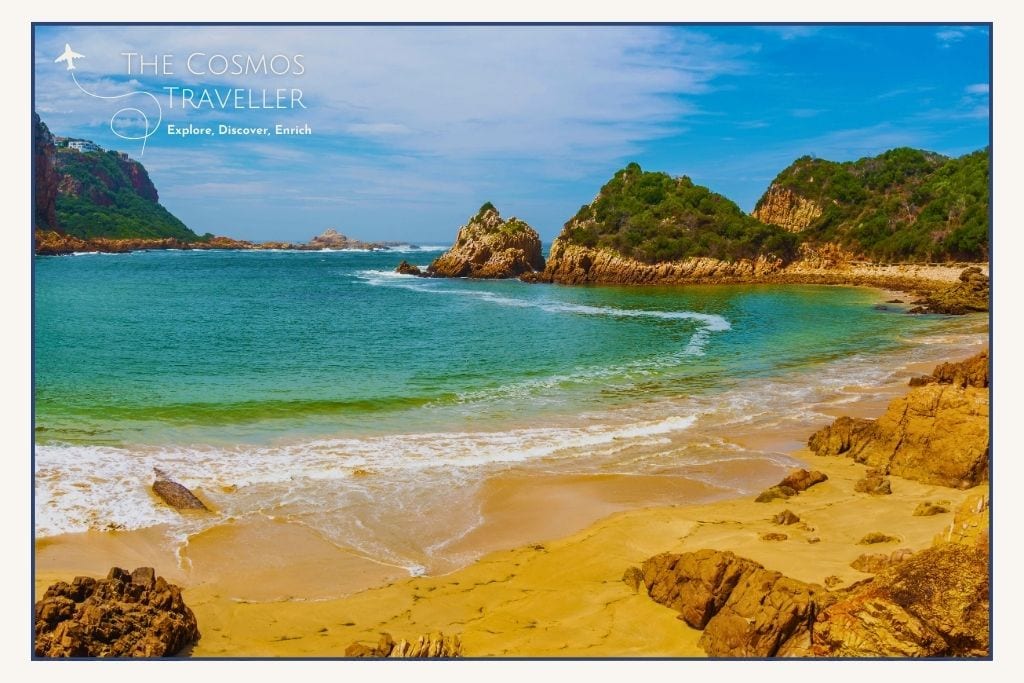
If you’re researching things to do in Knysna in 2026, this guide covers the highlights in town and the best nearby experiences along this stretch of the Garden Route. My advice is simple: allow yourself at least two or three days. Plettenberg Bay may be only 20–30 minutes away, but it was the lagoon swims, golden-hour views and easy island walks that made Knysna the perfect base for us. We’re already planning to return next year and spend a full week here — which probably tells you all you need to know.
Quick Facts About Visiting Knysna
📍 Location: Garden Route, Western Cape, South Africa
🚗 Best Base: Thesen Island or Leisure Island
⏳ Ideal Stay: 2–3 nights (longer if you enjoy a slower pace)
🌊 Highlights: Knysna Heads, lagoon swims, Robberg hike, Thesen Island
🏖️ Best Nearby Beach: Buffalo Bay
🚶 Best Day Trip: Robberg Nature Reserve (20–30 mins away)
📅 Best Time to Visit: October–November or January–February
🦪 Festival Season: Knysna Oyster Festival (July)
🚘 Car Needed? Yes – essential for exploring beyond town
💡 Good to Know: Stick to well-established areas like Thesen Island, Leisure Island and the Heads for the most convenient and secure stays.
Why Base Yourself in Knysna?
Knysna really is one of those rare towns that feels like it has a bit of everything. You have lagoon-side living and marinas at the centre of town, ocean beaches just beyond the Knysna Heads, and forested hills rising behind it all. It’s compact, scenic and easy to settle into.
Neighbourhoods like Thesen Island and Leisure Island give the place a relaxed, almost American / Cape Cod feel — walkable, calm and ideal for slow mornings and golden-hour strolls. There’s also a stronger restaurant and coffee scene here than in many of the smaller Garden Route towns, which makes staying a few nights feel easy rather than limiting.
Location-wise, Knysna sits perfectly between Wilderness and Plettenberg Bay, with the Robberg Nature Reserve just a short drive away. That means you can enjoy a relaxed base while still accessing beaches, hikes and wildlife experiences within 30 minutes. For us, it struck the ideal balance between atmosphere and accessibility — which is exactly what you want on a Garden Route trip.

Plan Your Trip With My Favourite Resources







The Best Things to Do in Knysna
One of the reasons I enjoy returning to Knysna is that it genuinely caters to different travel styles. You can make it action-packed with hikes and wildlife experiences, spend your days moving slowly between lagoon swims and beach walks, or lean into long lunches and good coffee with a view. For a relatively compact town, the range of things to do in Knysna is surprisingly broad — and that’s exactly what makes it such an easy place to base yourself for a few days.
Sunset at the Knysna Heads
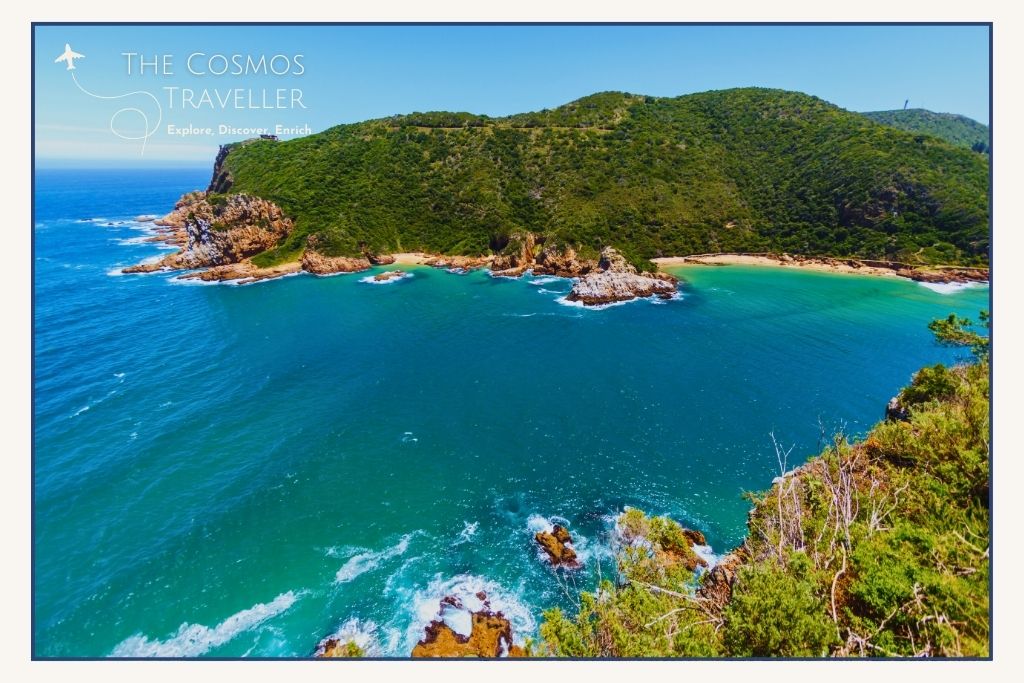
If there’s one sight that defines Knysna, it’s the Heads. These dramatic sandstone cliffs frame the narrow entrance between the lagoon and the Indian Ocean — a 230-metre channel that can look glassy and calm one day, then wild and impassable the next. Either way, it’s an impressive place to stand and take it all in.
You’ll need a car (or strong legs on a bike — it’s a steep climb) to reach the Eastern Head viewpoint. At the top, there are two main perspectives worth exploring: one looking back across the lagoon towards town and the Outeniqua Mountains in the distance, and another facing out to sea where the channel meets the Indian Ocean. Take time to visit both — the contrast between sheltered lagoon and open ocean is what makes this spot so special.
For a different angle, drive down to Coney Glen Beach at the base of the cliffs. From below, the scale of the rock formations feels even more dramatic, and it’s a great place to linger around golden hour.
Explore Coney Glen Beach
Tucked just beyond the Knysna Heads on the ocean side, Coney Glen feels wilder and more dramatic than the sheltered lagoon below. From the Eastern Head viewpoint, follow the road signs down Coney Glen Drive — a narrow, winding descent with sharp bends and steep sections — to reach the small parking area at the base. Take it slowly; it’s not a road to rush.
The beach itself is rugged and intimate rather than expansive. There’s sand, but it’s broken up by rock formations, small coves and tidal pools that create little nooks for sitting, paddling and exploring. We loved the drama of the swell rolling in and the constantly shifting light against the cliffs. It’s a brilliant place for photography — especially from the pedestrian bridge that connects the rock formations and gives you a slightly elevated perspective over the water.
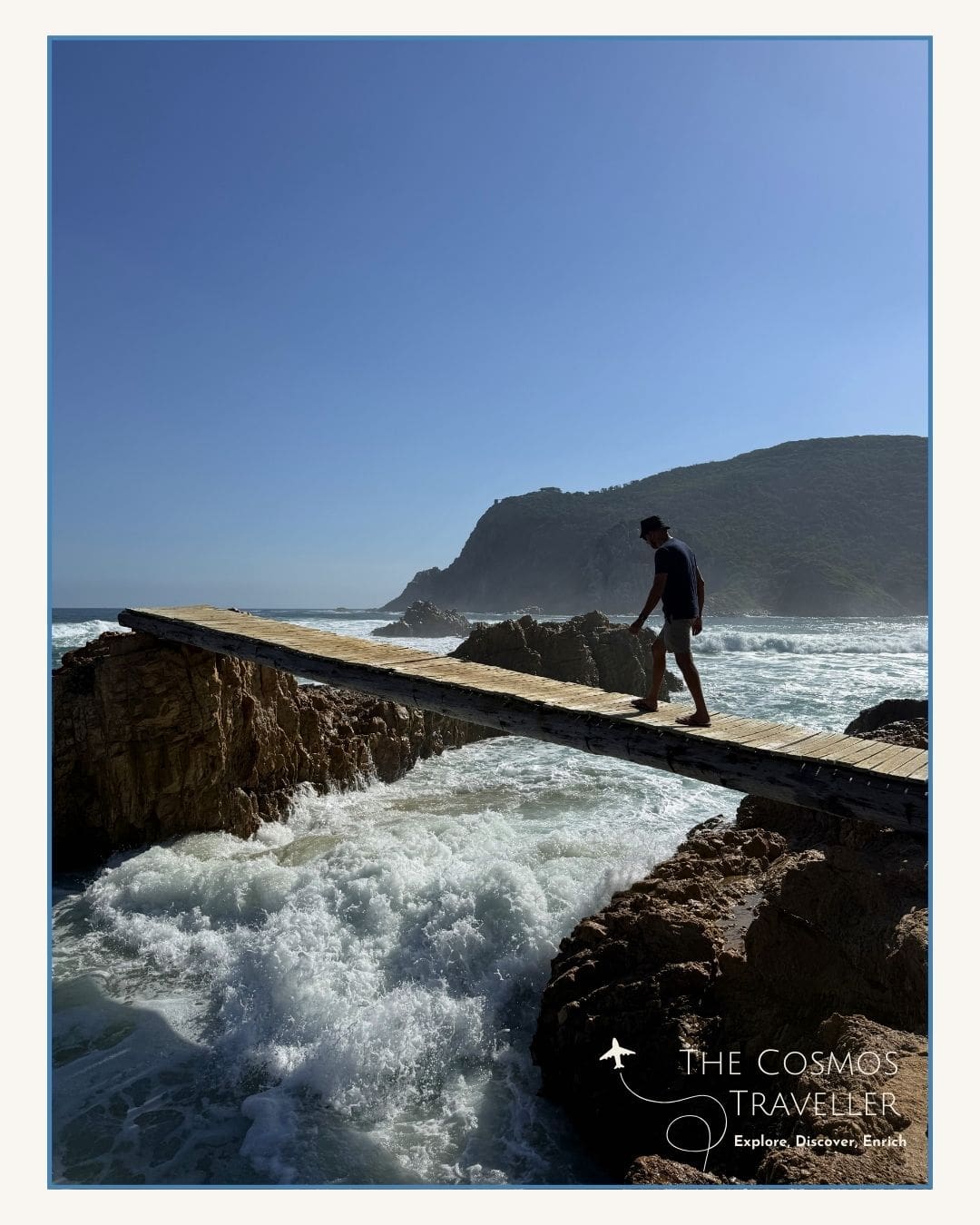
This is not a safe swimming beach in the open ocean. The currents can be strong and the channel unpredictable, so it’s best enjoyed for walking, rock pooling and soaking up the scenery rather than venturing out into deep water. If you time it right, golden hour here is particularly special — the cliffs glow and the atmosphere feels worlds away from the calm lagoon just a few minutes above.
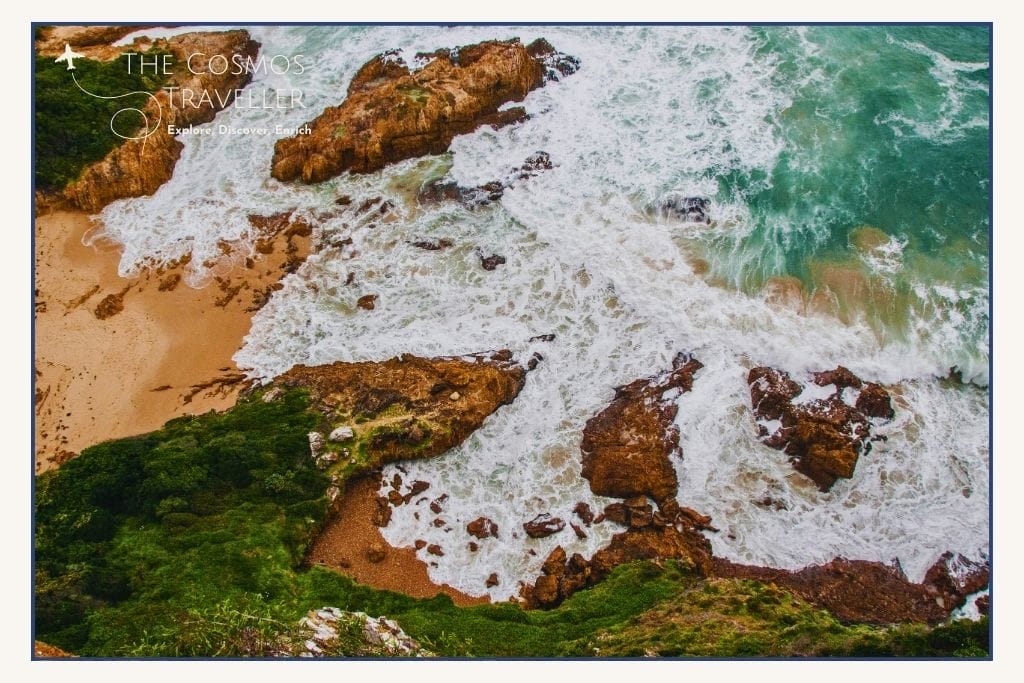
There are 11 beaches in the greater Knysna area to explore, but Coney Glen is easily one of the most dramatic and great to combine with visiting the heads.
Swim in the Knysna Lagoon
One of the obvious — and often underrated — things to do in Knysna is get in the water. Between the sheltered lagoon and the beaches beyond the Knysna Heads, you’re never far from a swim — but conditions matter.
I attempted a swim near the rocky outcrop at the Heads and quickly realised I hadn’t researched the spot properly. What looked like a manageable swell from shore behaved very differently once I was in it. I’m normally confident in the water, but within minutes I was knocked sideways and washed against the rocks by a surge — nothing serious, just a few scratches and a bruised ego, but a useful reminder that this stretch of coast deserves respect.
If you’re looking for calmer water, the lagoon side is the better choice. Around Leisure Island — particularly near Bollard Bay — the water is shallower and generally protected from strong currents. On still mornings the surface can feel almost glassy; by afternoon, wind often picks up, making earlier swims more comfortable.
Water temperature varies with the tide and season, but in summer it’s refreshing rather than cold — ideal for a relaxed dip rather than a long-distance swim. As always in tidal environments, check conditions on the day and pay attention to local signage or NSRI (National Sea Rescue Institute) guidance before heading out.
Visit Buffalo Bay for a Classic Beach Day
If you’re looking for a more traditional, sandy ocean beach near Knysna, Buffalo Bay (or Buffelsbaai) is the one locals consistently recommend. Around 15 minutes’ drive from town and set within the Goukamma Marine Reserve, it’s known for having some of the safer swimming conditions in the area — particularly at the main beach.
Unlike the rugged drama of Coney Glen, Buffalo Bay offers a broader stretch of sand, family-friendly swimming and popular surf breaks. If ocean swimming is high on your list and conditions around the Heads feel unpredictable, this is a more relaxed alternative.
Walk Around Thesen Island
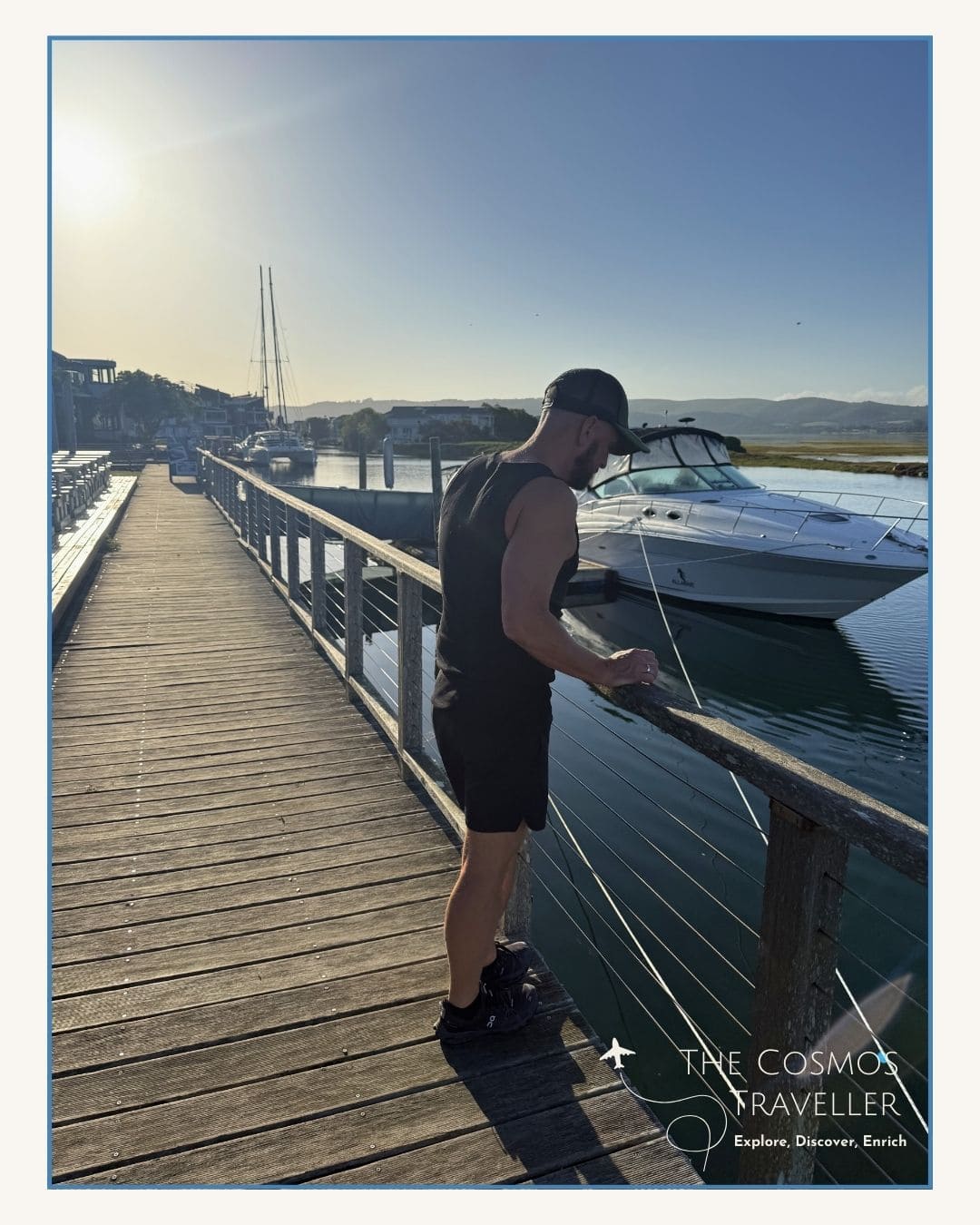
If the Heads give Knysna its drama, Thesen Island gives it personality. I stayed here in an Airbnb and quickly understood the appeal. With its clapboard-style houses, wooden jetties and quiet canals, there’s a distinct Cape Cod feel — clean, calm and easy to wander.
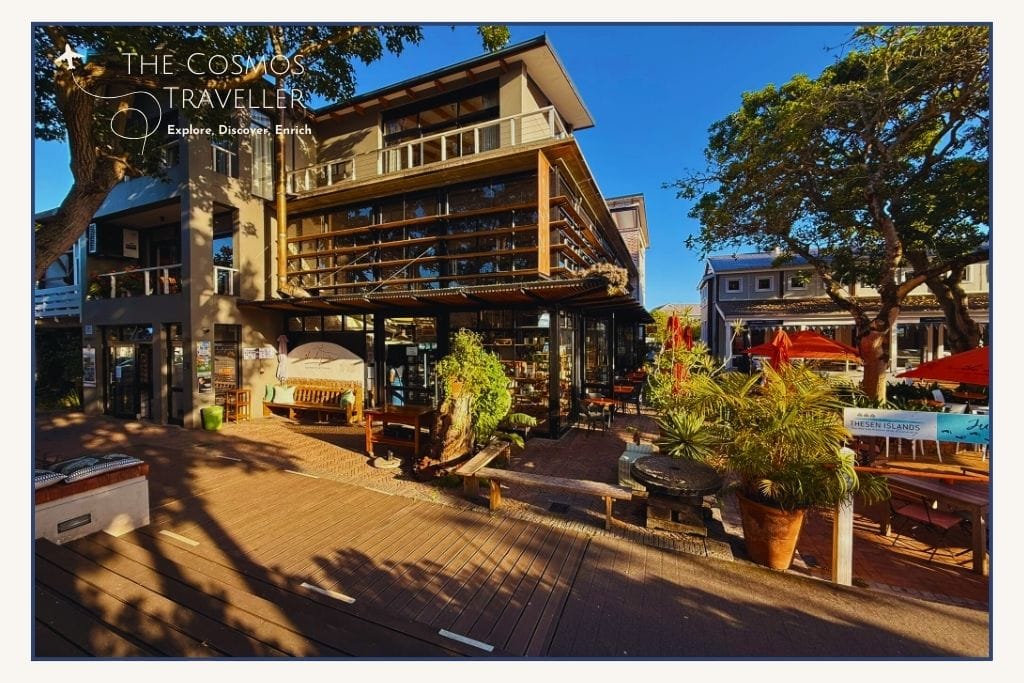
Visitors to the island can explore Thesen Harbour Town, the waterfront area with restaurants and boutiques, but the canal-side residential sections are private and not accessible by the public. That mix makes it feel secure and peaceful without being closed off.
For breakfast, île de païn is a long-time favourite. The old industrial buildings around it — once part of the island’s timber yard and shipyard — have been thoughtfully repurposed. If you’re looking to stay in the heart of the action, The Lofts Boutique Hotel sits right on the harbour and is one of the most convenient and atmospheric options in town.
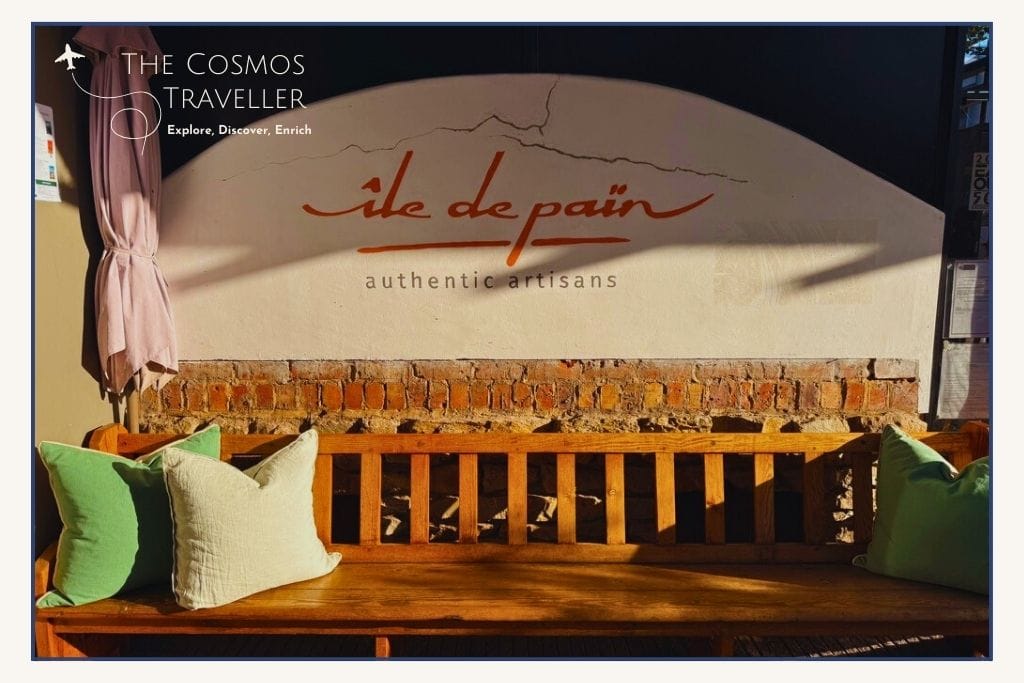
💡 Top Tip: On Thesen Island, stick to Harbour Town — residential canals are private.
Explore the Knysna Forest
If the lagoon defines Knysna visually, the forest defines it atmospherically. The indigenous forests surrounding town are now protected as part of the Garden Route National Park, and stepping under the canopy feels like entering a different world — cooler, darker and layered in that unmistakable scent of damp earth and yellowwood.
I first walked here more than 20 years ago on a short out-and-back trail recommended by the local tourist office. It led to a series of rock pools — beautiful, quiet and perfect for a pause — though the walk itself was the real highlight. The forest is dense and alive, and at one point I very nearly sat on what I later discovered was a venomous tree snake. That moment cured any temptation to wander off-path. This is wild terrain, even if it doesn’t look dramatic at first glance.
Today, there are several well-marked options depending on how much time you have. The popular “Circles in a Forest” trails offer shorter and longer loop choices, while areas like Jubilee Creek and Diepwalle provide picnic spots, river access and gentle walks beneath towering yellowwoods. You don’t need to be chasing mythical elephants to enjoy it — simply being under the canopy for an hour is enough to understand why the forest is such a core part of Knysna’s identity.
Take a Lagoon Cruise at Sunset
If you prefer to see Knysna from the water rather than from above, a lagoon cruise is one of the most enjoyable ways to do it. There are several operators in town, ranging from larger group boats to smaller sailing charters — but if you’re after something a little more polished and less crowded, I’d opt for a catamaran.
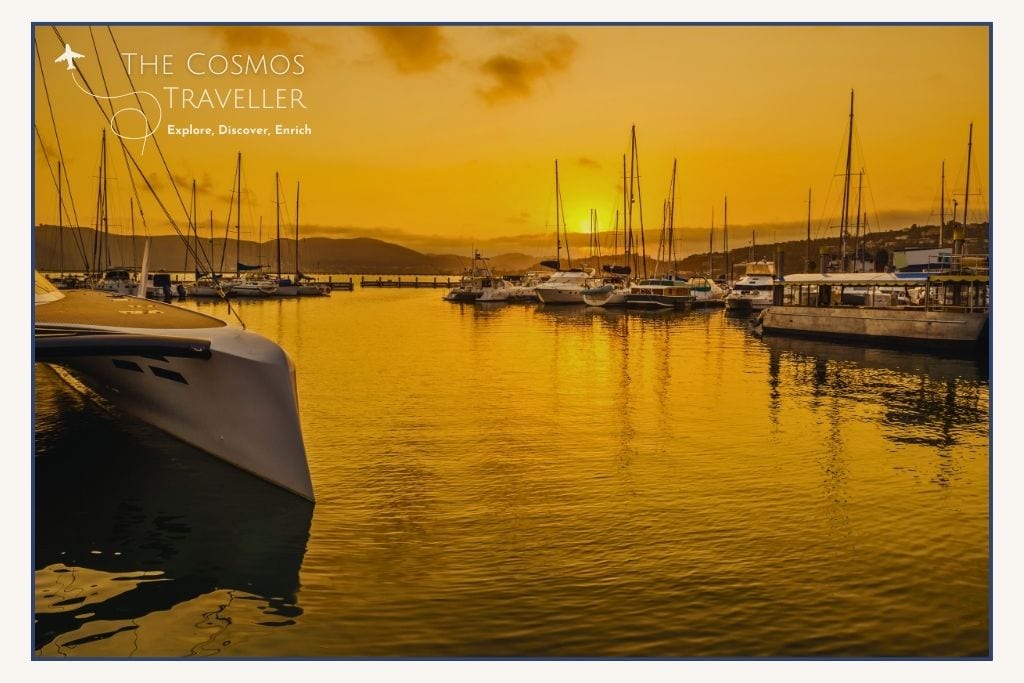
One of the most appealing options departs directly from the jetty near Sirocco on Thesen Island. The 55-foot luxury catamaran cruise includes a welcome glass of bubbly, sails past Leisure Island and Featherbed Nature Reserve, and — weather permitting — heads out through the iconic Knysna Heads into the Indian Ocean.
On the return leg, a Captain’s braai is served on board as the sun drops over the lagoon. It’s slightly more expensive than some of the larger boats, but the space, atmosphere and sailing experience feel far more relaxed.
👉 You can check availability and current pricing for the luxury sunset catamaran cruise here.
💡 Top Tip: Book the sunset departure rather than an afternoon slot — the light over the Heads and lagoon is far more atmospheric in the evening.
Easy Day Trips from Knysna
One of the biggest advantages of basing yourself in Knysna is how central it is. On this trip, I genuinely couldn’t decide whether to stay in Knysna, Wilderness or Plettenberg Bay. In the end, we split it — one night in Wilderness and two in Knysna — but if I’m honest, I’d happily have done all three in Knysna.
Wilderness works beautifully as a stop or half-day excursion, and we saw more than enough of Plettenberg Bay without needing to repack and move accommodation again. That flexibility is exactly why Knysna makes such a strong base: you get variety without the hassle of constant check-ins and check-outs.
Explore Wilderness
Wilderness sits just 30 minutes west of Knysna and makes an easy half-day trip. It’s smaller and quieter, with a slightly bohemian feel, and works perfectly as a scenic day trip from Knysna.
Map of Africa Viewpoint
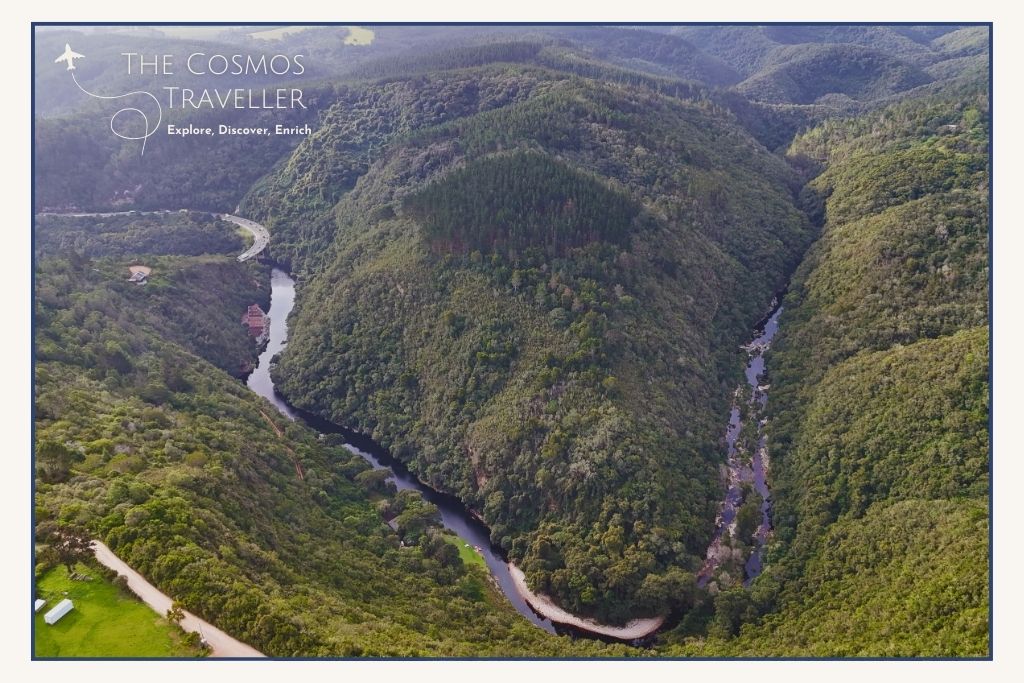
The most iconic stop is the Map of Africa viewpoint above Wilderness Heights. From here, the curve of the Kaaimans River forms an unmistakable outline of the African continent — one of those natural features that actually does look like the photos. The final stretch of road to reach here is gravel but manageable in a standard car, and there’s no entrance fee.
It’s also worth walking across the road to the paragliding launch site. The views over the coastline are superb, and if you’re lucky you’ll see colourful gliders lifting off into the thermals. I flew my drone here and it’s easily one of the most photogenic viewpoints along this stretch of the Garden Route.
Wilderness Beach
If the viewpoint is dramatic, the beach is expansive. Wilderness Beach stretches for kilometres — wide, white sand and big Indian Ocean energy. I stayed right on the beachfront and loved watching dolphins moving through the swell from the terrace. Sunrise and sunset walks here feel vast and almost cinematic. Swimming is possible, but like much of this coastline, currents can be strong — this is more of a walking beach than a swim spot.
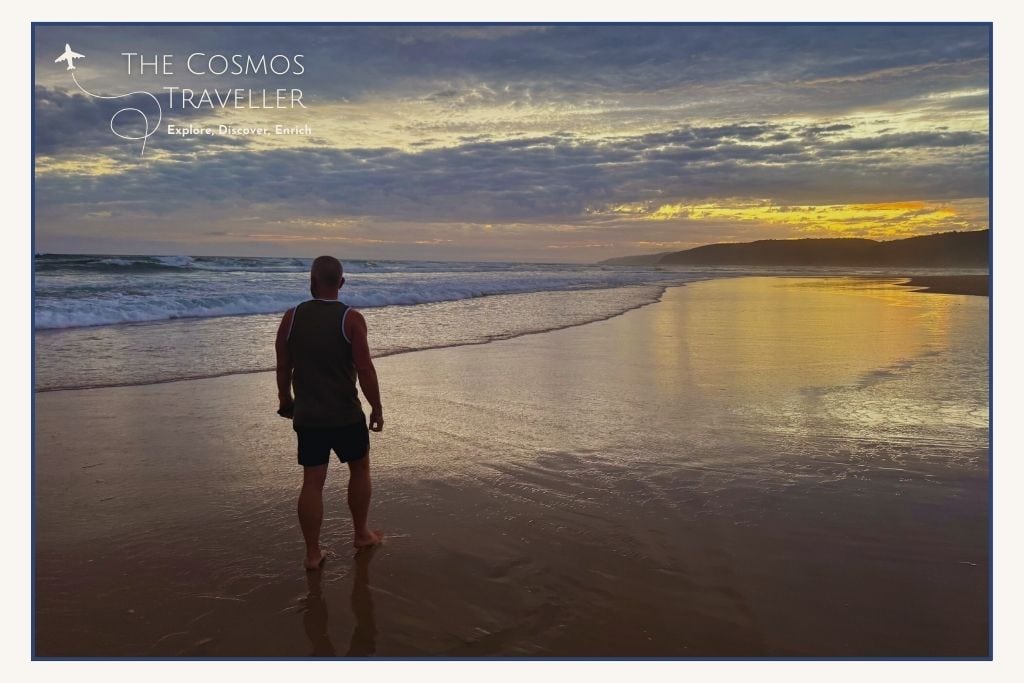
💡 Top Tip: Swim lagoon-side rather than ocean-side unless you’re confident in surf conditions.
Touw River Lagoon
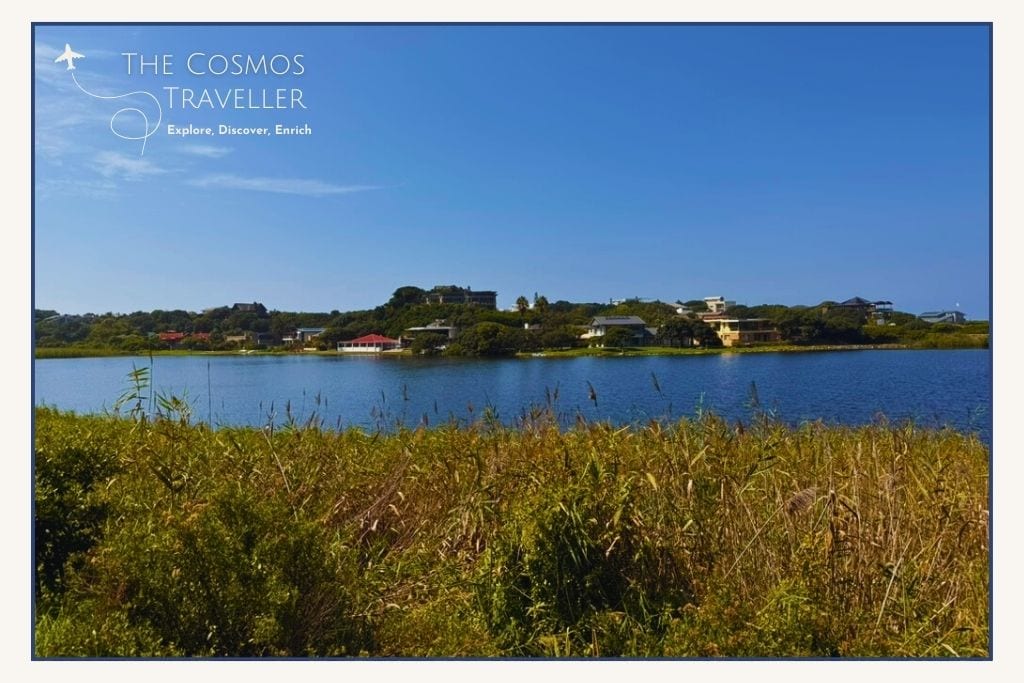
For calmer water, the Touw River Lagoon inside the Garden Route National Park is the better option for being on the water. Shallow, warm and surrounded by reeds and milkwood trees, it’s popular for kayaking and gentle paddling. If you’re short on time, the Map of Africa and a beach walk are more than enough — but if you want water-based activities, this is where to head.
Visit Plettenberg Bay
Plettenberg Bay sits just 20–30 minutes east of Knysna and has a noticeably more polished, beach-holiday feel. The town is clean, neat and well-kept, with a slightly upmarket energy compared to Knysna’s lagoon-side charm.
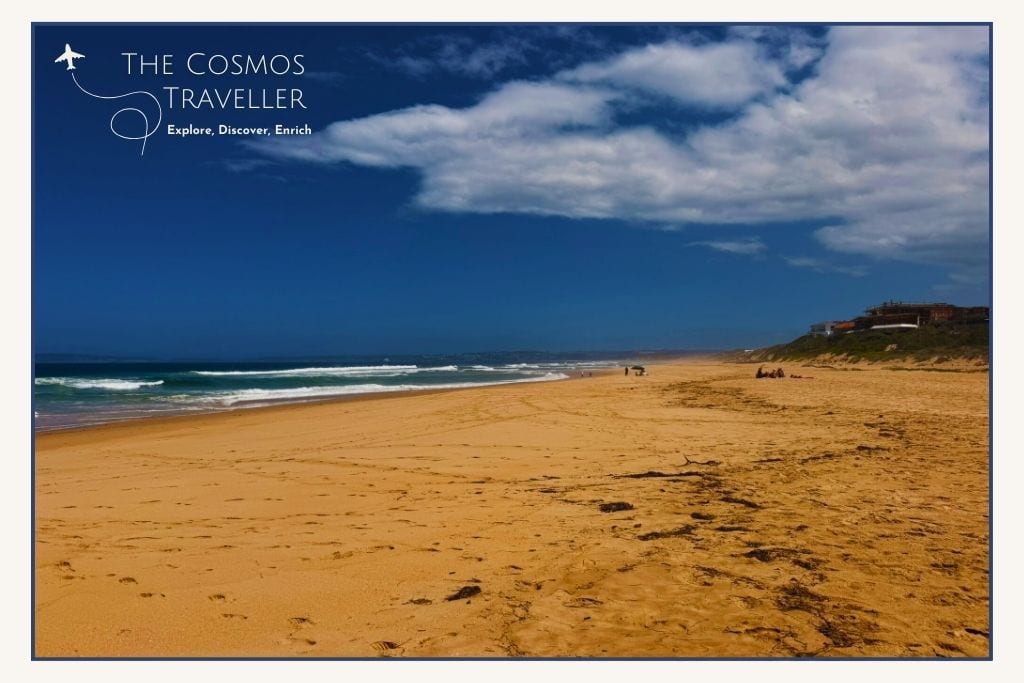
The main beach is wide and beautiful, with lifeguards on duty and sunbeds available to hire — something you won’t find on many of the more remote stretches along this coast. It looks out towards one of the area’s large, landmark hotels perched dramatically above the sand. If you’re after convenience, facilities and an easy swim, this is the place.
I also explored beaches further along from town towards Keurboom Beach, closer to the nature reserves, and found long, quiet stretches with very few people. They felt wonderfully private — but bring shade, as there’s very little natural cover. As with much of this coastline, you’ll need to pay attention to lifeguard advice and shark flag systems, as great white sharks are known to pass through these bays.
Hike the Robberg Peninsula
If there’s one standout experience near Plettenberg Bay, it’s the Robberg Nature Reserve. This protected peninsula offers some of the most dramatic coastal hiking on the Garden Route.
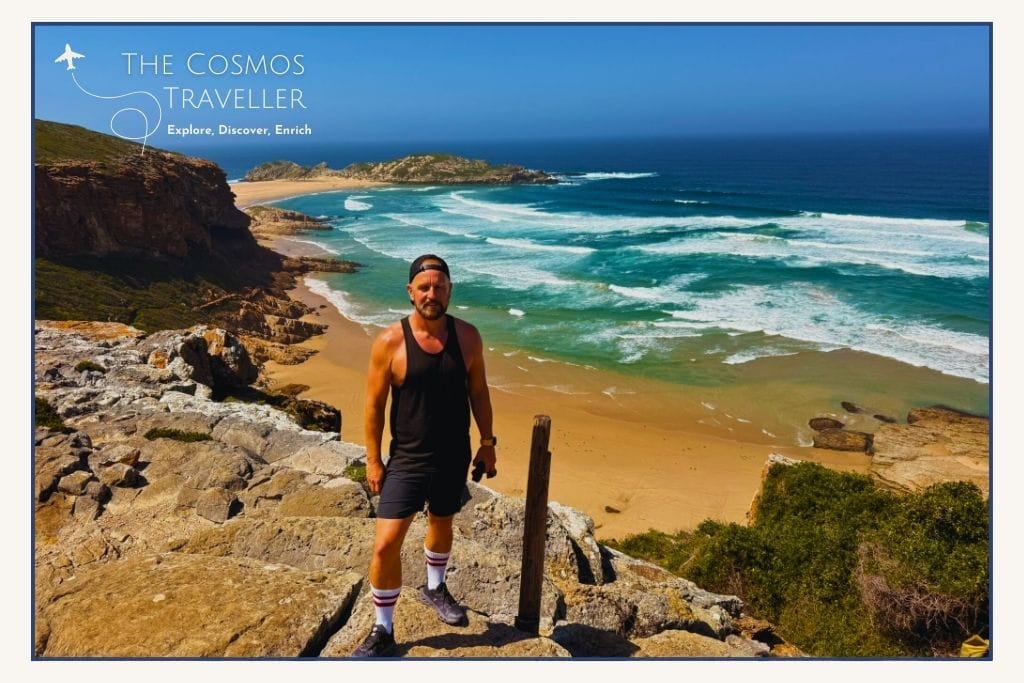
We arrived just after 9am and, in hindsight, earlier would have been better. The sun builds quickly and there’s very little shade along the exposed sections. There are three route options — roughly 2km, 5.5km and 9.5km — with both the longer routes passing via Witsand Beach, a sweeping stretch of sand tucked below the cliffs.
I chose the 5.5km loop, which struck a good balance. There’s some light scrambling toward the end, but nothing overly technical, and the views are extraordinary. From the cliffs we watched seals below and dolphins moving through the bay towards Plettenberg. I kept half an eye out for great whites too, though didn’t spot any. It’s a genuinely memorable hike and easily one of the best natural experiences within reach of Knysna.
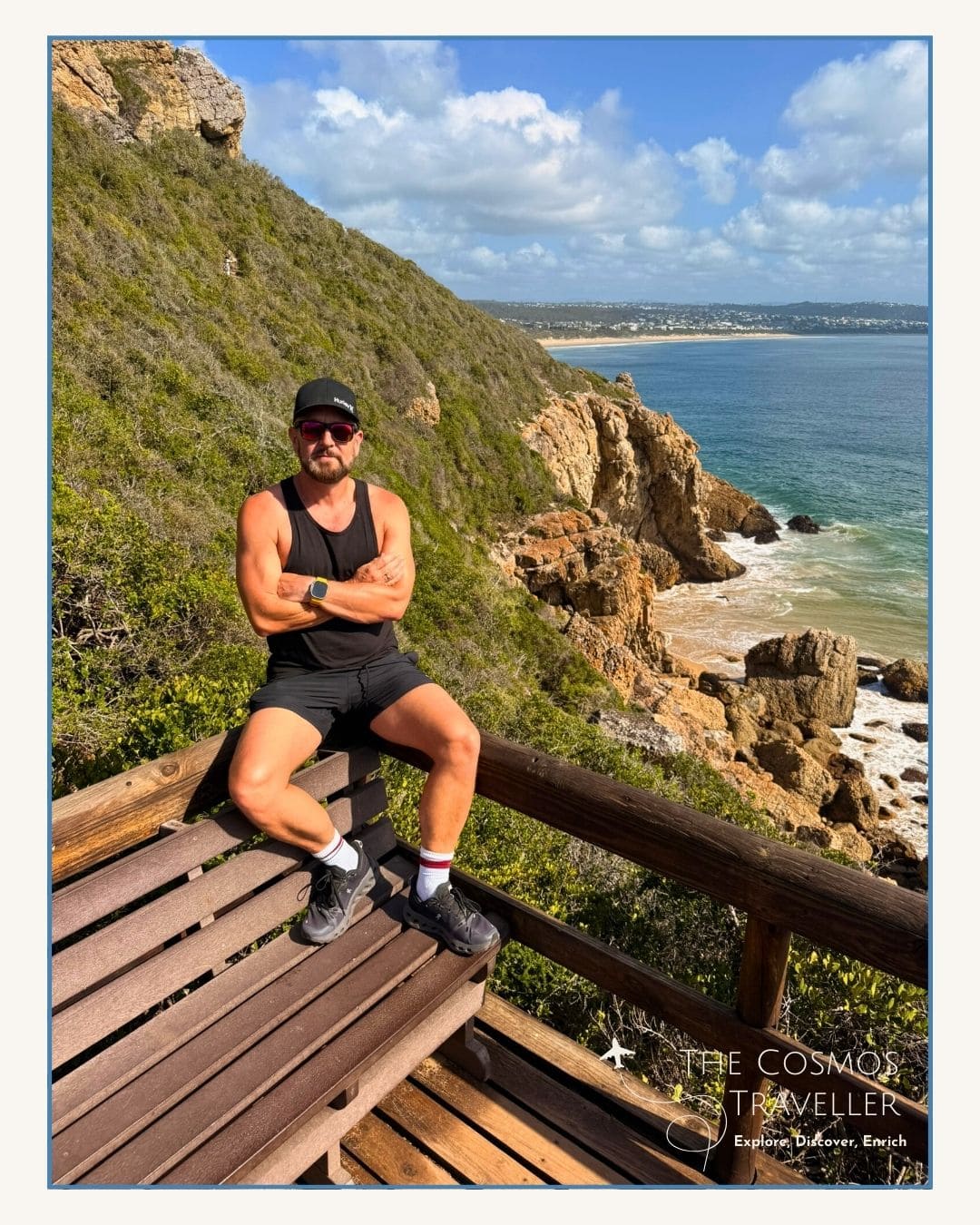
💡 Top Tip: Arrive at Robberg by 7–8am in summer — there’s little shade and it heats up quickly.
Wildlife Encounters at Monkeyland & Birds of Eden
I’ll admit I was sceptical before visiting. Wildlife parks can feel overly touristy and inauthentic. Monkeyland, however, completely changed my perspective.
The forest is held in trust for the primates themselves, and the animals are all rescues from zoos or exploitative situations around the world. You explore with a guide, walking through the forest as lemurs and monkeys move freely around you. At times they were quite literally at our feet. It’s immersive, ethical and genuinely one of the most memorable wildlife experiences I’ve had.

Birds of Eden sits next door and is included in a joint ticket, which I would recommend. After the intensity of Monkeyland it can initially feel quieter, but as you move deeper into the aviary the interaction increases and the scale of the habitat becomes impressive. Together, they make for a rewarding half-day outing that adds a very different dimension to a Garden Route stay.
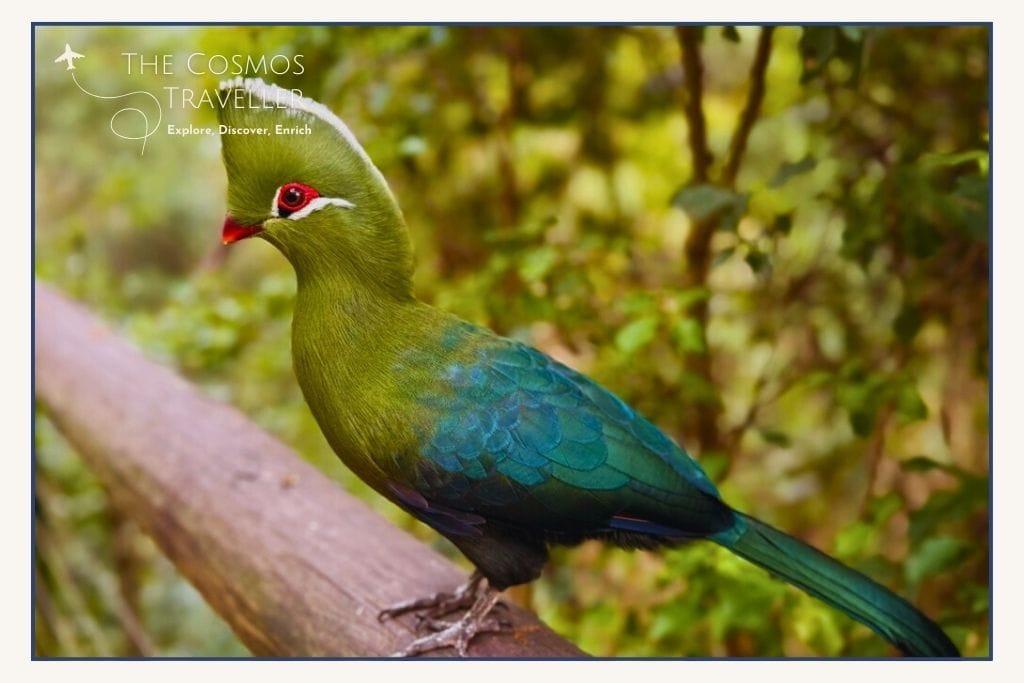
💡 Top Tip: Book Monkeyland & Birds of Eden as a joint ticket to save time and money.
A Flexible 2-3 Day Knysna Itinerary
If you’re basing yourself in Knysna, two to three nights gives you enough time to experience the town itself and explore beyond without constantly repacking.
Day 1 – Settle into Knysna
Start slowly on Thesen Island with breakfast or brunch at île de païn, then wander the harbour and boardwalks.
In the afternoon, head to Coney Glen Beach for some time by the ocean before driving up to the Knysna Heads in time for late-afternoon light and sunset views. It’s a gentle first day that gives you a strong sense of place.
Day 2 – Robberg & Plettenberg Bay
Set off early for Robberg Nature Reserve and tackle the 5.5km route before the heat builds. After your hike, continue into Plettenberg Bay for coffee or lunch and a relaxed afternoon on the beach.
If you have the energy, visit Monkeyland and Birds of Eden later in the day — the joint ticket makes it easy to combine both.
💡 Top Tip: Arrive at Robberg by 7–8am in summer — there’s very little shade and it heats up quickly.
Day 3 – Lagoon & Forest
Ease into your final morning with a swim around Leisure Island, particularly near Bollard Bay where conditions are usually calmer.
In the afternoon, head into the Knysna Forest for a shaded walk beneath the canopy — the perfect contrast to the exposed coastline of the previous days.
Where to Stay in Knysna
Accommodation in Knysna varies widely. Some properties still feel a little dated, so if — like me — you prefer modern interiors, crisp white bedding and thoughtful amenities, it pays to choose carefully.
Most of the more contemporary options are around Thesen Island, Leisure Island and near the Knysna Heads.
Here are the places I would personally recommend:
Stay on Thesen Island (Walk Everywhere)
The Lofts Boutique Hotel
Modern, central and right on the marina. If you want to walk to breakfast at Île de Païn, sunset drinks and dinner without touching your car, this is the most convenient base.
👉 Check availability and current rates for The Lofts Boutique Hotel here.
The Turbine Boutique Hotel & Spa
A converted power station turned boutique hotel, with more of a spa-retreat feel. Ideal if you want something a little more indulgent.
👉 View rooms and spa packages at The Turbine Boutique Hotel here.
💡 Top Tip: Thesen Island accommodation books up quickly in peak summer and during the Oyster Festival — reserve early if you’re travelling December–January.
Stay on Leisure Island (Calm Lagoon Mornings)
The Knysna Belle Guest House
Set directly on the lagoon, this is perfect if you want quieter surroundings and easy access for morning swims.
👉 See availability for The Knysna Belle Guest House here.
Stay Near the Heads (For Dramatic Views)
Knysna Pearl View Guesthouse
Cliffside views and sunset drama. Expect steep roads, but the ocean outlook makes it worthwhile.
👉 Check rates for Knysna Pearl View Guesthouse here.
Nature & Cabin Vibes
Under Milkwood Resort
Wooden chalets beneath milkwood trees right on the lagoon — relaxed, self-catering and family-friendly.
👉 Explore chalet options at Under Milkwood Resort here.
Osyters & Where to Eat in Knysna
Knysna and oysters are inseparable. The town’s annual Knysna Oyster Festival (held in July each year) remains one of the highlights of the South African events calendar, drawing visitors for food, sport and a distinctly festive winter atmosphere.
There are two main varieties you’ll encounter: the cultivated Pacific oyster and the wild Knysna oyster, which grows naturally along the Southern Cape coastline. Wild oysters have a more irregular shell and deeper flavour profile, and they’re widely available in restaurants throughout town.
💡 Top Tip: If you’re visiting during the Oyster Festival, book restaurants well in advance — July is far busier than many expect.
Breakfast & Brunch
île de païn
Still one of the best breakfast spots in town. Artisan breads, excellent coffee and a marina setting on Thesen Island make it a reliable favourite.
Oak Leaf Brunch Café
A short drive to Belvidere, but worth it for a relaxed garden setting and genuinely good brunch menu.
Dinner
East Head Café
More than just a café — the setting on the rocks overlooking the Heads is hard to beat for sunset views.
Café Mario
An easy, reliable Italian option in town. Good for hearty meals without fuss.
Freshline Fisheries
Casual seafood spot where you can bring your own wine — ideal if you want something unfussy and local.
When is the Best Time to Visit Knysna
Knysna enjoys a mild, temperate climate year-round, with temperatures generally ranging between 15°C and 30°C. There isn’t a truly “bad” time to visit — but the experience does shift with the seasons.
🌸 September to November – The Sweet Spot
Spring and early summer are arguably the most balanced months. The weather is warm but not oppressive, the lagoon is inviting, and the summer holiday crowds haven’t yet peaked. It’s ideal for hiking, exploring the forest and enjoying long, clear evenings without battling for restaurant reservations.
🌻 January & February – Late Summer Calm
While December is peak holiday season in South Africa, January and February often feel more relaxed once the festive rush subsides. The lagoon is warm, sunsets are long and golden, and the town settles into a slower rhythm. If you enjoy swimming, kayaking and beach time, this is an excellent window.
💡 Top Tip: Avoid arriving in late December unless you enjoy busy beaches and fully booked restaurants — it’s the busiest period of the year.
🍁 May to July – Whale Season & Oyster Festival
Winter is cooler (around 10–20°C), but still very manageable by international standards. Southern right and humpback whales migrate along the coast during these months, and the annual Knysna Oyster Festival (in July) adds a lively atmosphere to town.
If you enjoy food festivals and don’t mind crisp mornings, winter can be surprisingly appealing.
My Take
For a balanced experience — warm water, manageable crowds and good hiking conditions — I would personally choose late spring (October–November) or late summer (January–February).
You get the best of Knysna without the peak-season intensity.
FAQs about Knysna
How many days do you need in Knysna?
Two to three nights is ideal. That gives you enough time to explore the lagoon, the Heads and Thesen Island, while also fitting in a Robberg hike or a trip to Plettenberg Bay or Wilderness without feeling rushed.
If you prefer a slower pace, a week works beautifully — especially if you enjoy mixing beach time with forest walks and good restaurants.
Is Knysna better than Plettenberg Bay?
They’re different.
Plettenberg Bay feels more polished and beach-focused. Knysna offers a broader mix — lagoon, forest, ocean viewpoints and a more compact town centre. For me, Knysna works better as a base because of its central location and variety.
Is Knysna safe?
Knysna is generally safe for visitors, particularly in established tourist areas such as Thesen Island, Leisure Island and around the Heads. Like anywhere in South Africa — or any popular destination globally — basic vigilance is important.
Stick to well-lit areas at night, avoid displaying valuables, use accredited tour operators, and swim only in lifeguard-supervised areas when in the ocean.
On our recent trip in 2026, we felt comfortable walking around Thesen Island and dining out in the evenings. As always, awareness rather than anxiety is the key.
💡 Top Tip: Choose accommodation in well-established areas such as Thesen Island, Leisure Island or near the Heads if you want added peace of mind.
Do you need a car in Knysna?
Yes. While parts of town (especially Thesen Island) are walkable, you’ll need a car to explore Robberg, Wilderness, Buffalo Bay or the forest areas. Public transport is limited, and self-driving gives you the most flexibility.
What is the best time of year to visit Knysna?
For warm water and manageable crowds, late spring (October–November) and late summer (January–February) are excellent. July brings whale sightings and the annual Knysna Oyster Festival, but it’s also busier during that period.
The Wrap Up about Things to do in Knysna
I first visited Knysna in 2004, and it stayed with me. The combination of lagoon, forest and ocean felt unlike anywhere else along the Garden Route — dramatic without being overwhelming, relaxed without being sleepy.
It took 22 years to return, but after spending a few days here again in 2026, I was reminded exactly why it left such an impression. Knysna isn’t just about ticking off viewpoints or beaches. It’s about rhythm — morning swims in the lagoon, slow breakfasts on Thesen Island, sunset light over the Heads, and the ease of having Wilderness and Plettenberg Bay within easy reach.
If you’re researching things to do in Knysna, my advice is simple: don’t rush it. Give yourself time to settle in. Base yourself well — Thesen Island would be my pick — and explore at a pace that allows you to actually enjoy it.
In fact, on our next three-month stay in South Africa, we’re planning to spend at least a week here. That probably tells you everything you need to know.
Plan Your Trip With My Favourite Resources
👇🏼 Save this guide, share it with your travel companions, and don’t forget to pin, post, or message it to yourself for later.

Written by Richard Hoskisson
Founder of The Cosmos Traveller
With over 30 years of travel experience across France, South Africa, the UAE and Greece — and many more far-flung places — Richard spends up to three months each year exploring South Africa’s Western Cape. Having first visited Knysna in 2004 and returning again in 2026, he shares practical, first-hand insights to help curious travellers explore beyond the obvious.
Published March 2026