
Last Visited: July 2026
Rethymno tends to get overlooked in favour of its more photogenic neighbour, Chania — but it earns its own place on any Crete itinerary, and it’s the day trip I make every summer that I’m on the island. For me, getting lost in the back streets of Rethymno’s Old Town has more charm than Chania’s, and the Venetian architecture on show here is just as handsome.
Step outside the Old Town walls and the temperature drops the moment you walk in under the trees of the Municipal Garden — a genuine relief after a hot walk around the historic streets. It’s locals filling the benches here, not tourists.
This guide covers what you can genuinely take in during a single day in the city itself. Rethymno is known for its long stretch of sandy beach, but that’s not what this piece is about — the beach bars and package resorts along the coast are a different kind of experience to the one covered here.
For a longer Crete itinerary covering more of the island, see my full week in Crete guide.
Quick Facts – Rethymno, Crete Travel Guide
🏰 One walkable route: Fortezza → Thalassographia lunch → harbour & lighthouse → Rimondi Fountain → Neratze Mosque → Municipal Garden
🧭 At the mosque, choose Nikiforou Foka (quiet) or the main street (shops)
🏖️ Skip the town beach — package-holiday coastline, not this site’s vibe
🌴 Preveli: go early, before the tour buses and the heat
🚗 One day is plenty — I day-trip in from Plakias, 30 minutes away
📅 Best months: May, June or September, to dodge peak heat and crowds
✉️ Get more honest Crete guides like this one — join my list
The Walkable Old Town Route
However you arrive into Rethymno, start at the Fortezza. There is plenty of parking nearby if you’re driving and if you are coming by bus, it is a short coastal walk from the bus station. Admittedly, not the prettiest stretch of town, but it gets you moving before the heat sets in. From there the walking guide runs one direction across the Old Town, finishing at the Municipal Gardens for a proper cool-down after a hot morning on your feet (assuming that you visit in summer time).
Fortezza
Walking in, the entrance is genuinely imposing — you’re drawn into a stone tunnel before emerging into daylight at the other end. The Venetians built it in the 16th century to defend Crete against Ottoman invasion, and it’s one of the best-preserved fortresses on the island.
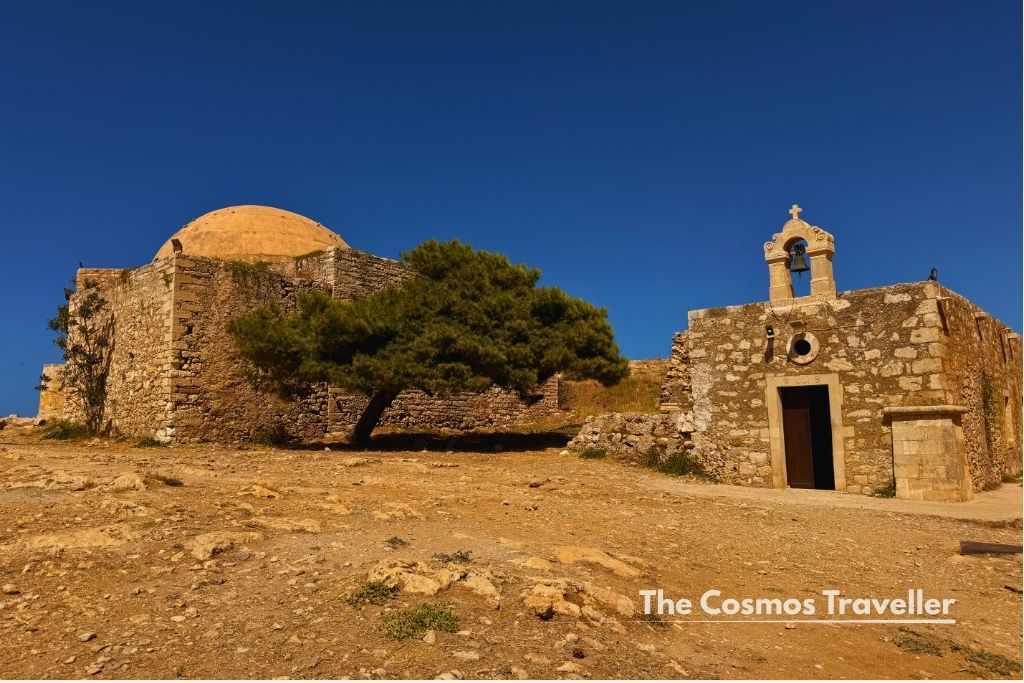
Inside, a few things are worth seeking out:
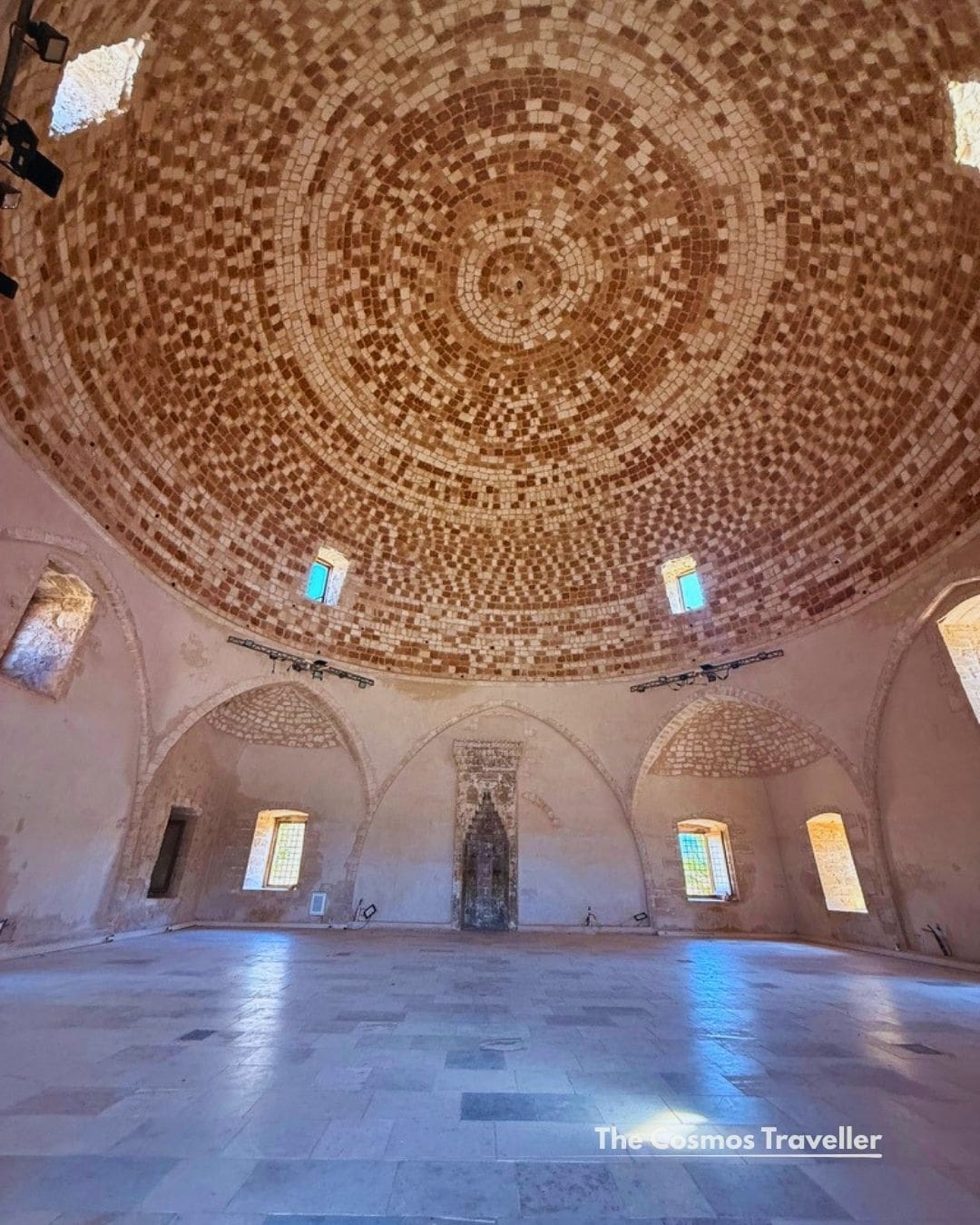
Sultan Ibrahim Mosque — a domed structure originally built as a church, later converted to a mosque.
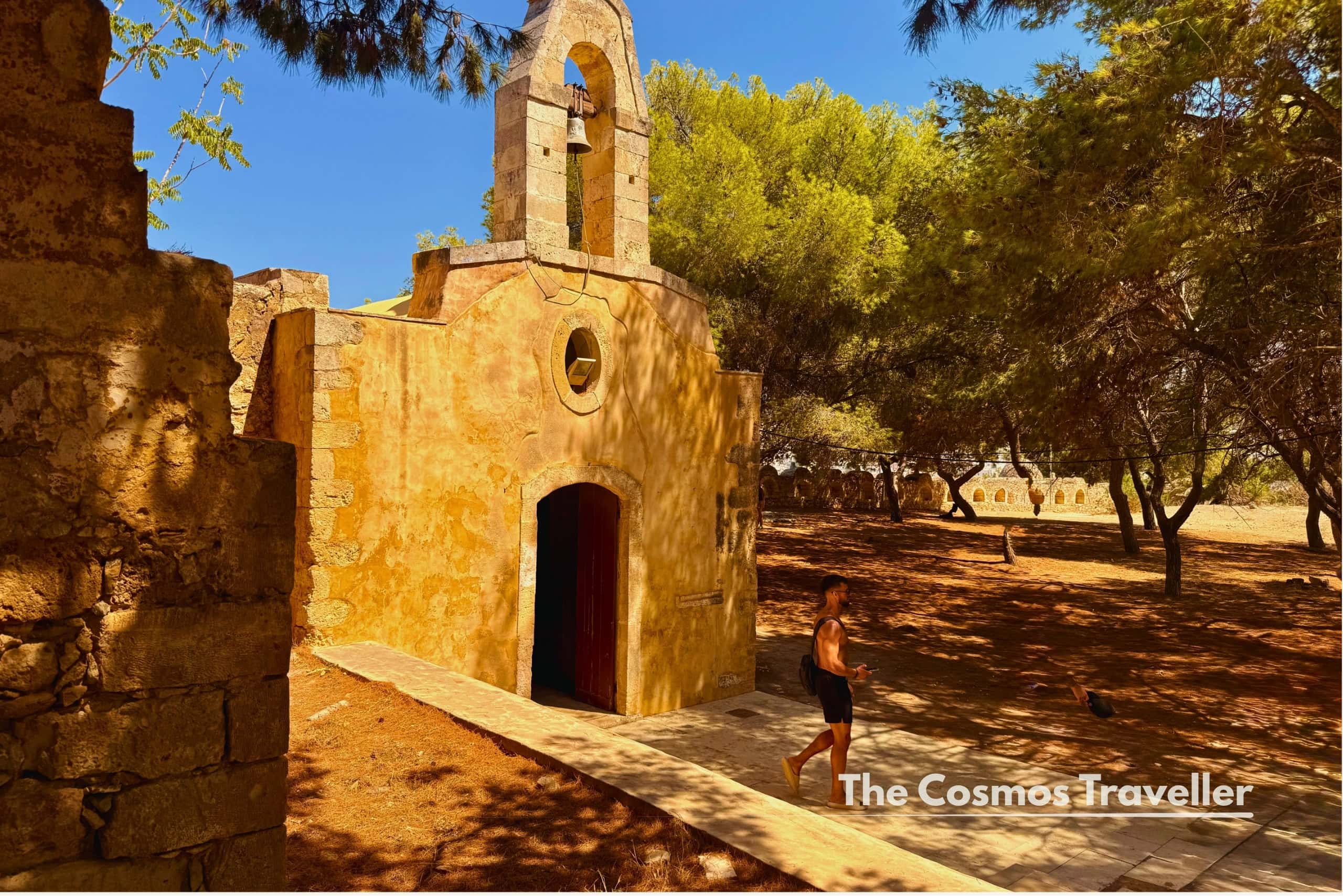
The Church of Agios Theodoros Trichinas — a small 16th-century Greek Orthodox chapel, shaded by pine trees, and a genuinely peaceful spot to pause partway round.
The fortification itself — the storage rooms, bastions and walls reward a slow, unhurried walk. Picture the soldiers who once stood guard here, and follow the passageways up to the viewpoints along the top, which are as much the draw as any single building.
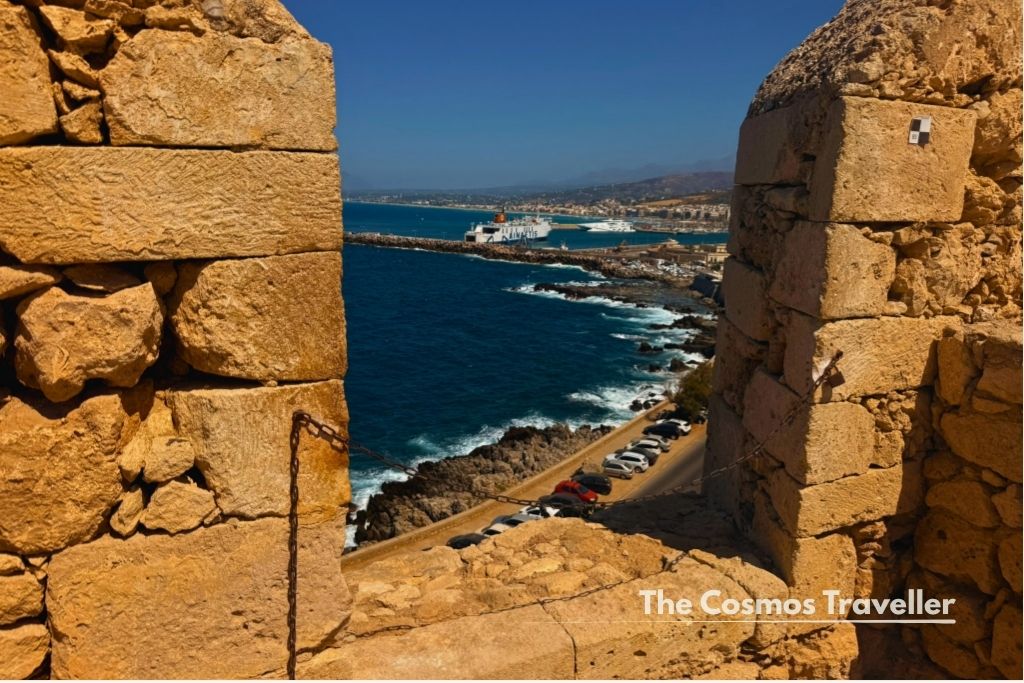
🎟️ Entry: €5 (as of July 2026)
⏰ Opening hours: 08:00–19:15 in summer (June–September), 10:00–17:00 the rest of the year
⏱️ Time needed: 60–90 minutes to see it properly
♿ Accessibility: not wheelchair-friendly
Thalassographia restaurant for lunch or coffee
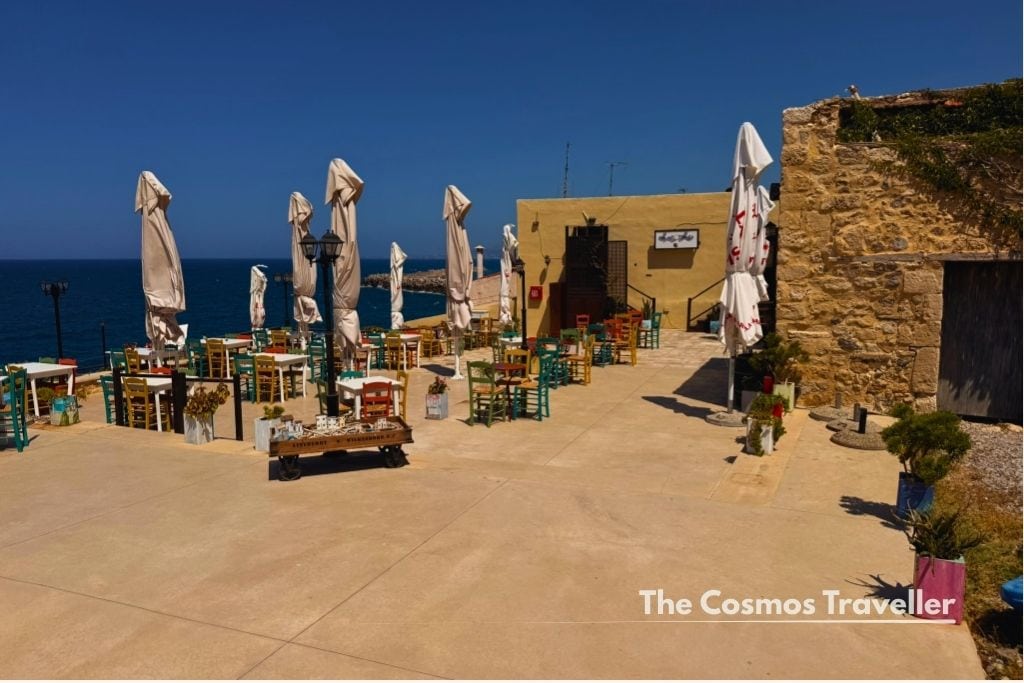
However long you spend inside the Fortezza, head to Thalassographia afterwards — it’s just outside the entrance tunnel, about 150m away. Skip the harbourside restaurants for this one: whether you want a light Greek salad, a heartier plate of souvlaki or octopus, or just a Freddo cappuccino, the food is good and the view from up here is superb.
Egyptian Lighthouse & Harbour
From Thalassographia, follow the steps down to the shoreline and keep the coastline on your left — this brings you to the harbour.
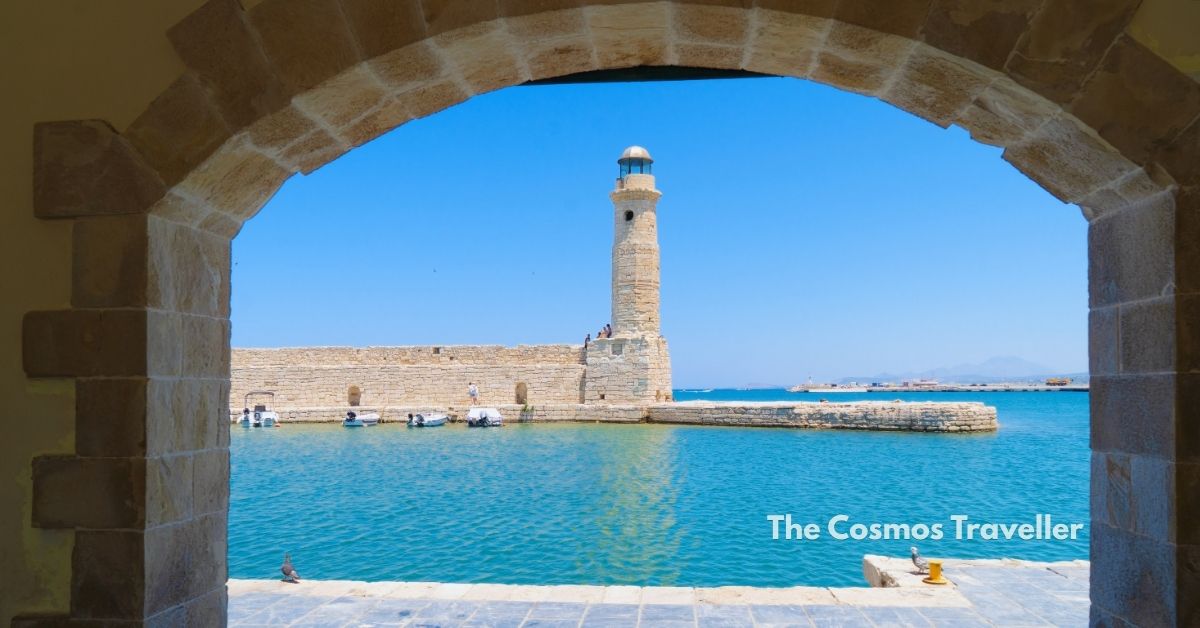
Once there, take the short walk out to the Egyptian Lighthouse, one of Rethymno’s most photographed sights. It was built around 1838, during the decade Crete was administered by Egypt under Mehmet Ali, which is where the name comes from. At 9 metres, it’s the second-largest surviving Egyptian lighthouse in Crete, after the one in Chania. I particularly like the faded Islamic patterning worked into the tower about halfway up.
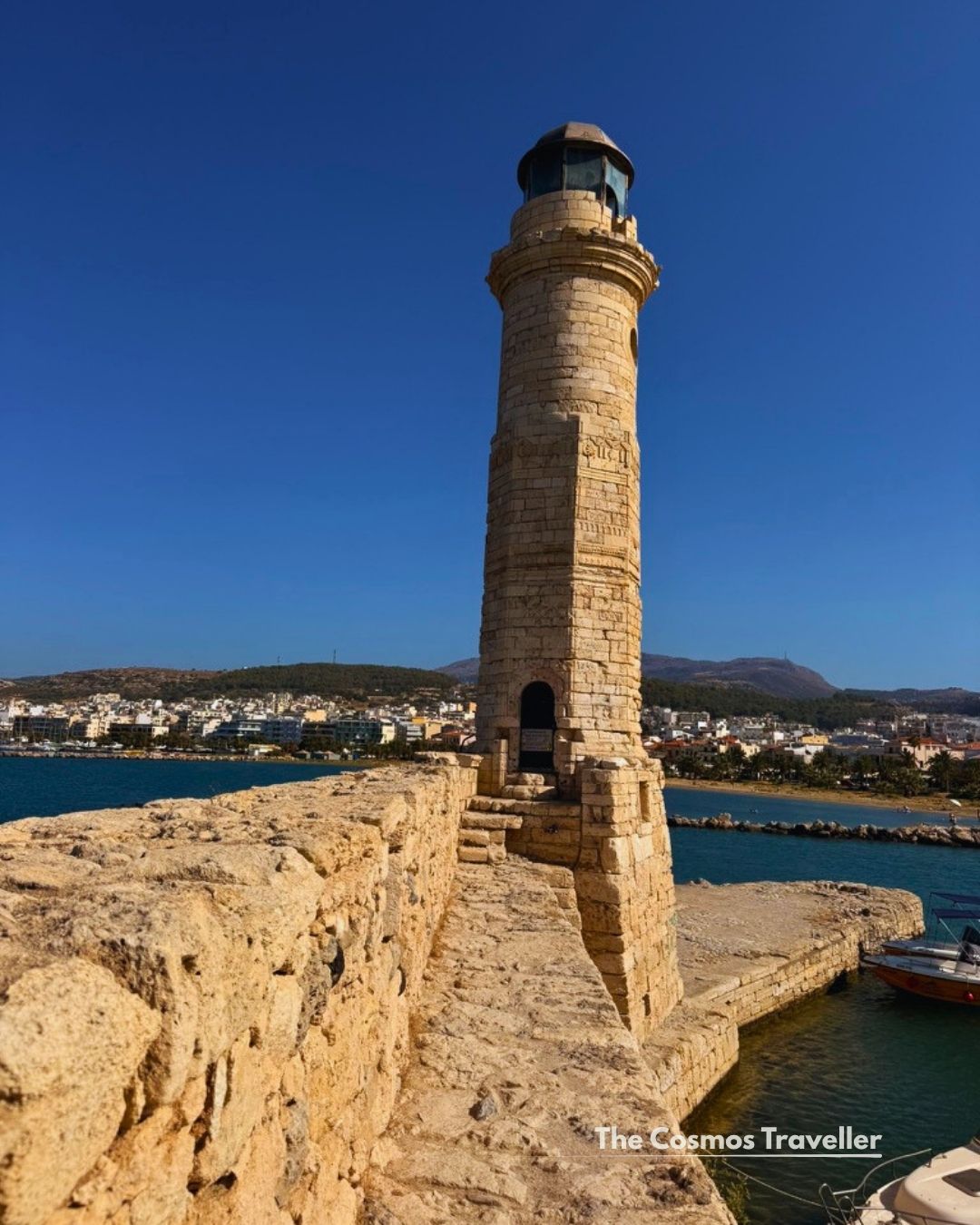
💡 Top Tip: this is the best vantage point for photographing the harbour.
The harbour itself is small — you’ll only need a few minutes to walk its length — but it’s worth slowing down for the atmosphere and the smell of the tavernas cooking. Some of the staff here can be pushy about waving you in; don’t let that put you off the walk, just steer clear of eating at those particular places — a rule I stick to everywhere in Crete. There’s another good photo spot at the far end of the harbour, with the lighthouse as the backdrop.
Rimondi Fountain
One of Rethymno’s most photographed landmarks, the fountain sits in Platanou Square (also called Petychaki Square), a short walk west of the harbour. Rector Alvise Rimondi built it in 1626, and for centuries it supplied much of the town’s water.
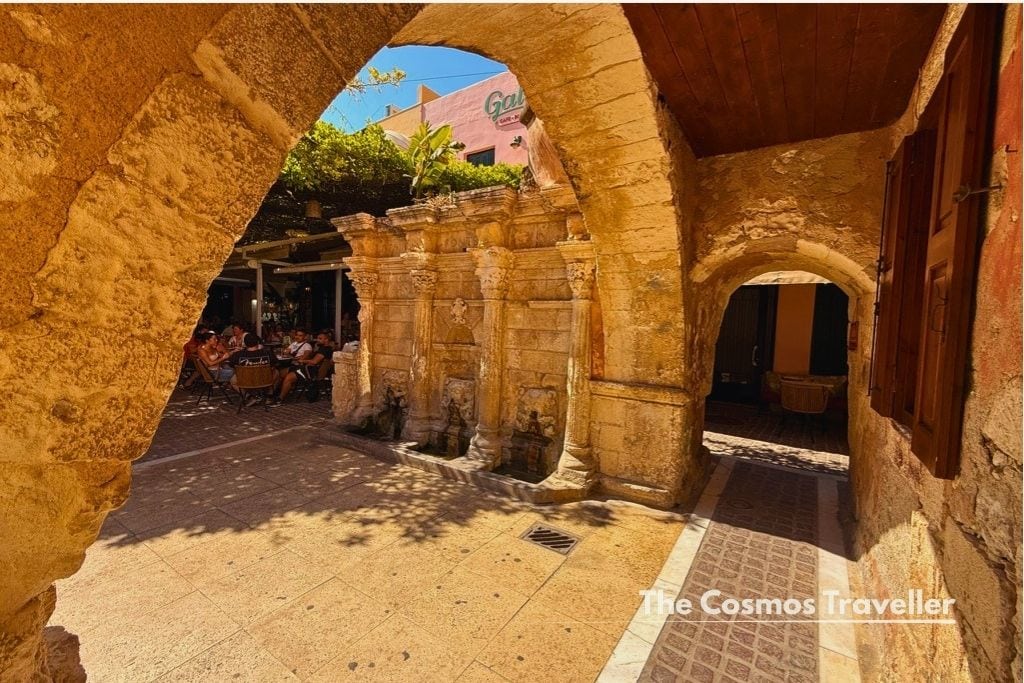
It’s a fine example of detailed Venetian design: three basins sit below three lion’s heads, where the water still emerges today, and three columns with Corinthian capitals carry a Latin inscription — Liberalitatis Fontes, “fountains of generosity.” A hemispherical dome was added during the Ottoman occupation, of which only one supporting pillar survives.
While I was there, I watched an elderly Greek yiayia fill a water bottle straight from the spout — the same simple task the fountain was built for, still happening exactly 400 years after Rimondi finished it. I couldn’t help wondering whether he ever imagined it would still be doing its job four centuries on.
Neratze Mosque
Neratze Mosque is one of the most striking sights in Rethymno’s Old Town, and the one I find myself drawn back to every time. Twenty-two years living in the Middle East left me with a genuine appreciation for Islamic design and architecture, and it still draws me in wherever I find it.
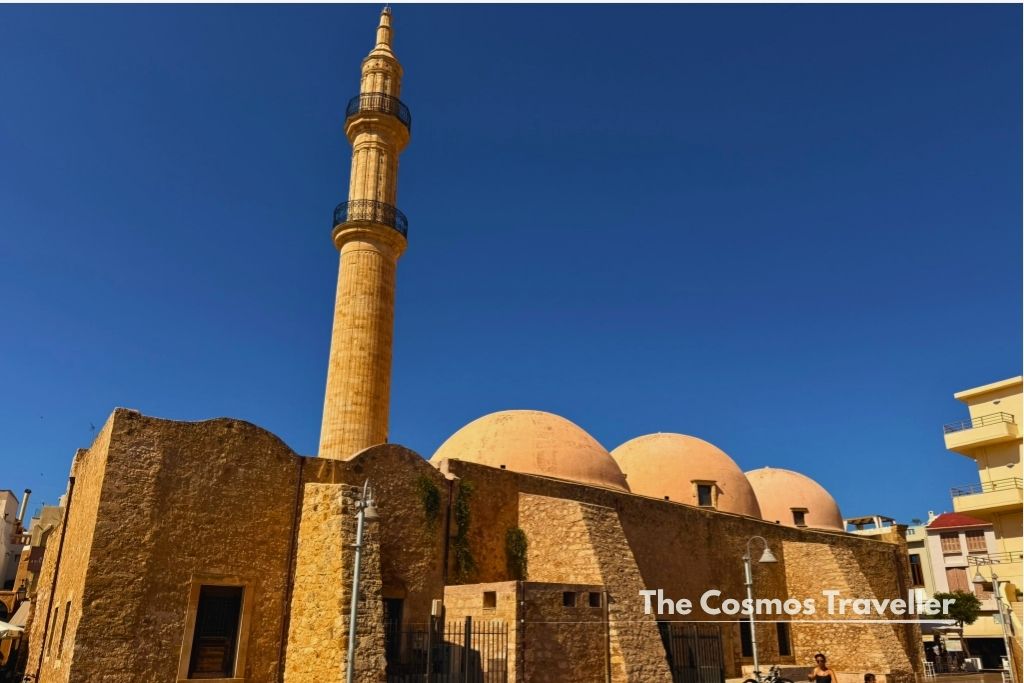
The building started life as the church of Santa Maria, built for an Augustinian monastery in 1601. When the Ottomans took Rethymno in 1646, the church wasn’t converted into a mosque until eleven years later, in 1657, dedicated to Gazi Hussein Pasha, the town’s conqueror. Its minaret went up in 1890, and at 33 metres it’s still the tallest structure in the Old Town — three semicircular domes below it mix Renaissance and Ottoman elements, and restoration work has uncovered dozens of Venetian-era graves under the floor.
The mosque’s domes sit low and understated — nothing like the soaring, ornamented domes you’d find on a Greek Orthodox or Roman Catholic church elsewhere in Europe, which makes it a tricky building to photograph well up close. It reminded me of the recreated mosque at Al Seef in Dubai, where the same thing struck me: the simplicity is the point. Older mosques put the emphasis on the act of faith itself, not the decoration around it, and that restraint is its own kind of beauty. The minaret rising above the rooftops is still the giveaway from a distance — a genuinely visible reminder of Greece as a crossroads between the Christian and Islamic worlds.
Today the mosque itself is the Municipal Odeon, Rethymno’s music conservatory.
Nikiforou Foka or Ethnikis Antistaseos: Which Way Next?
From the mosque, Makri Steno is just a few steps across Mikrasiaton Square — and here, the choice is yours. Break away into the quieter part of the Old Town along Nikiforou Foka Street (Makri Steno, or Long Alley), or stay on the busier main artery, Leoforos Ethnikis Antistaseos, the historic shopping heart of the Old Town.
Nikiforou Foka / Makri Steno
I discovered Makri Steno and the streets around it on my last visit to Rethymno, and I loved the slower pace here. It’s a mix of hotels and residential homes, with local Greeks going about their day and the odd souvenir shop thrown in. What I loved most, though, was the architecture — some buildings abandoned, others fine examples of Venetian design. You can easily spend a good while exploring these streets and find something new each time.
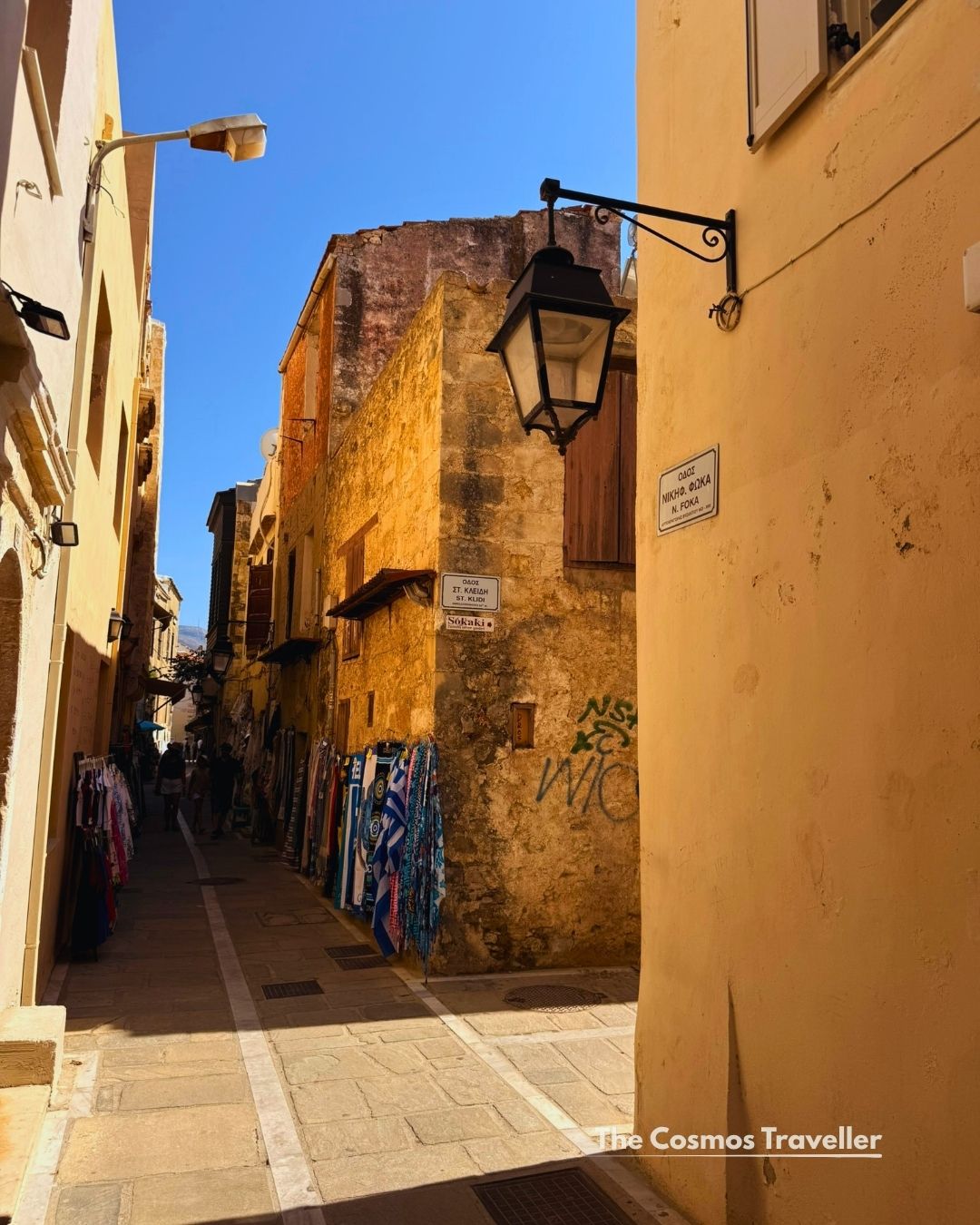
Leoforos Ethnikis Antistaseos
The busier Leoforos Ethnikis Antistaseos is also a pleasure to walk. This vibrant street is the central spine of the historic area, catering to the crowds entering the Old Town via Porta Guora. There are plenty of local artisan shops here — worth looking out for in particular is Móka, a long-standing herb and spice shop worth a browse even if you don’t buy anything.
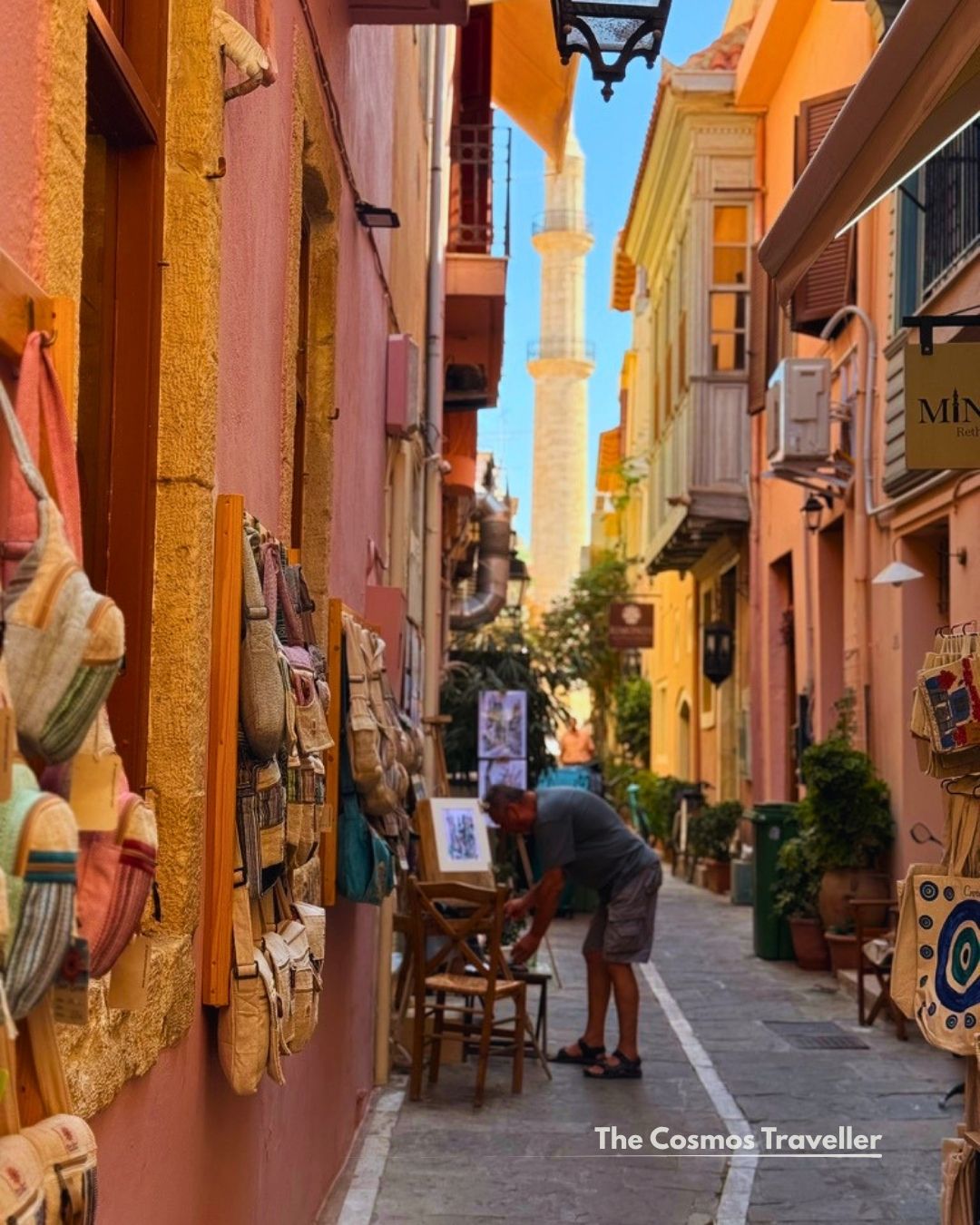
Porta Guora
If you stay on Ethnikis Antistaseos rather than ducking into Makri Steno, the street brings you straight to Porta Guora — the iconic entrance to Rethymno’s Old Town, and not a sight to miss.
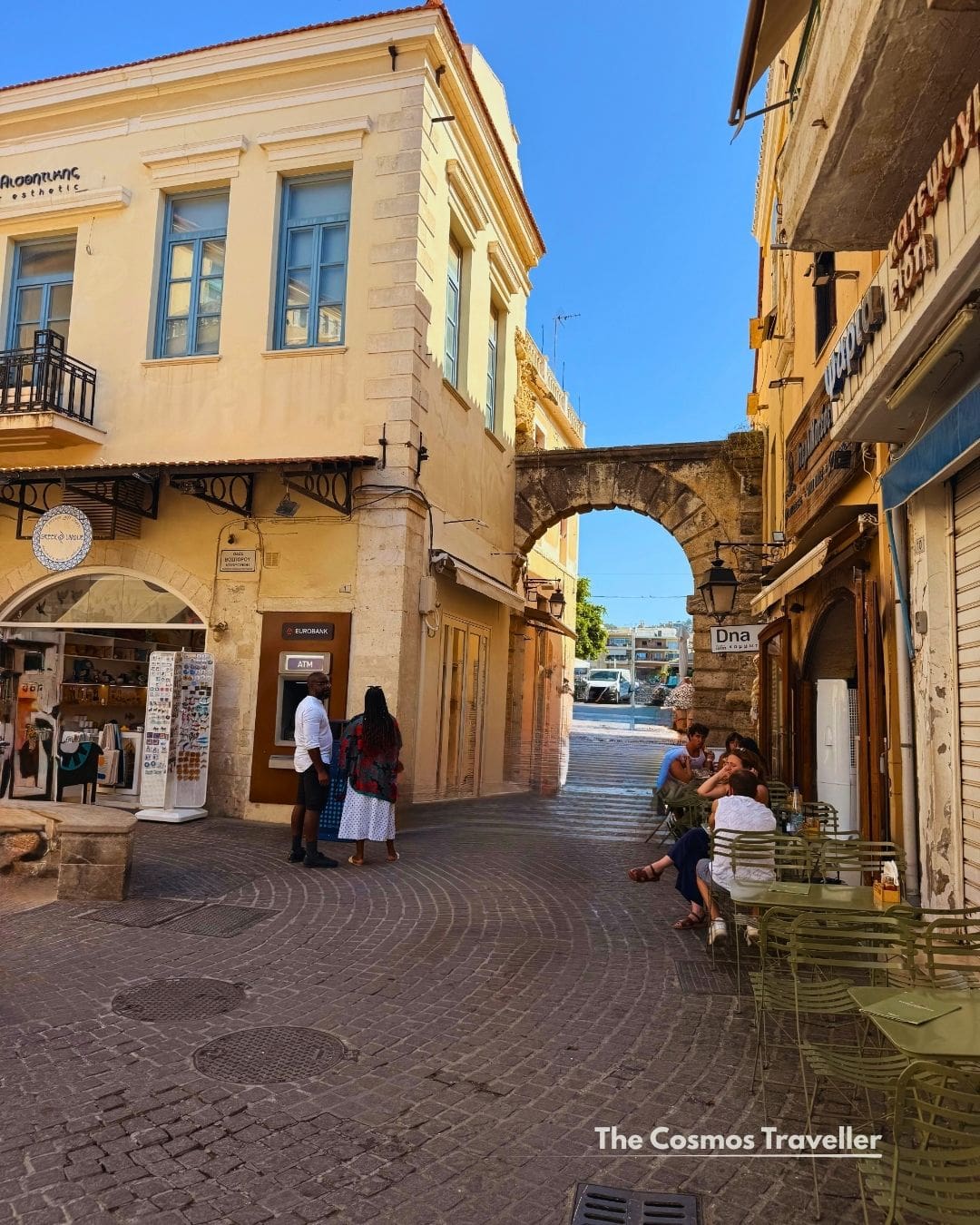
Rector Giacomo Guora had it built between 1566 and 1568, as part of the city’s Venetian fortifications — locally, it’s also known as Megali Porta, the “Big Gate.” The original structure was around 6 metres high, built from wood and metal, and once carried the Lion of St Mark, Venice’s emblem, above the arch. Today only that stone archway survives, but it’s testament to just how deep this bustling town’s history runs.
Even if you explore Makri Steno, I always loop back to walk through Porta Guora before the final stop — there’s something about passing through that old gate on the way that I don’t want to miss.
Municipal Gardens of Rethymno
I discovered the gardens for the first time on this year’s trip, in 2026. Walking back towards where I’d parked, I decided to cut through the gardens instead of walking around the perimeter.
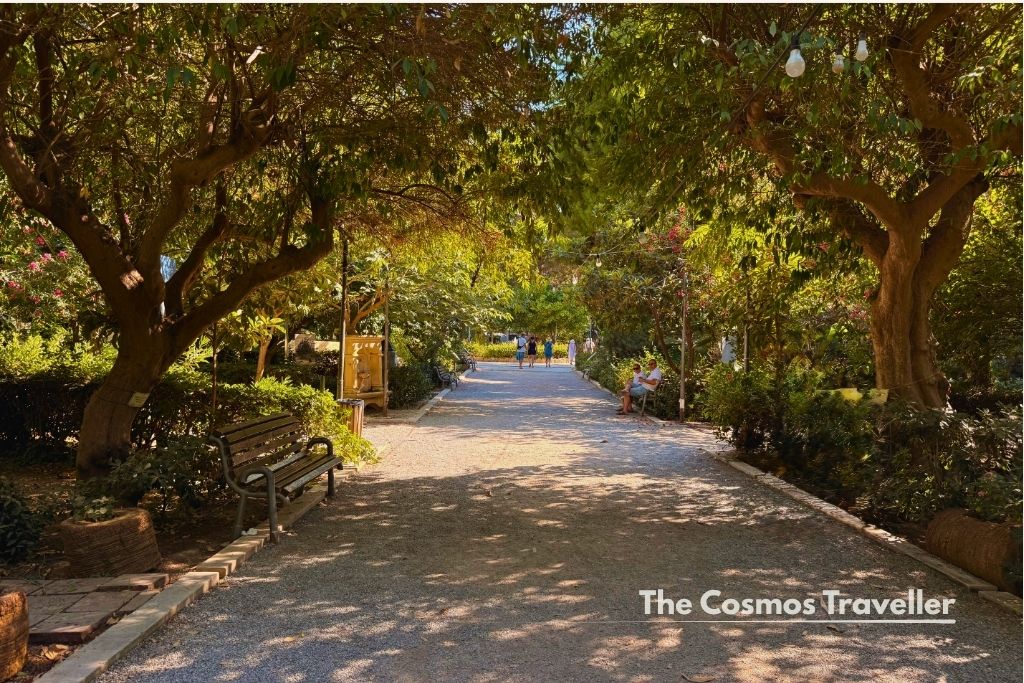
As soon as I stepped inside, I was struck by the coolness of the air and the tranquility of the garden. Local Greek residents sat on benches, taking in the shade and the relief from the hot summer air. It reminded me instantly of stepping into parks and gardens on my trips to Singapore and Hong Kong — for some reason, it evoked exactly the same feeling.
In the centre of the park was a bustling coffee shop, Le Jardin, full of locals unwinding and catching up on the news of the day. It felt like stepping back in time, and I loved it. I couldn’t resist a Freddo cappuccino of my own, sitting there and watching Rethymno’s afternoon unfold.
I’d genuinely recommend finishing your tour here — take a moment to rest before heading back to your car or the bus station.
Should You Stay in Rethymno, or Just Visit for the Day?
I personally treat Rethymno as a day in the city, not a base — the sights earn the visit, the coastline either side of town is built for package holidays and beach-bar resorts, which isn’t what this site covers.
I prefer to stay on the south coast of the island. Plakias and its surrounding villages is often my base for Rethymno and is only a short 30 minute drive away.
For more on where I’d base yourself across the island, see my guide to where to stay in Crete beyond the resorts.
Should You Swim in Rethymno?
As I mentioned earlier, Rethymno is a day trip for me — I find the south coast beaches far more appealing for swimming, and considerably less busy.
That said, if you really want to cool off after a warm day exploring the city, Platanes beach, a few kilometres east of town, is the best spot to stop.
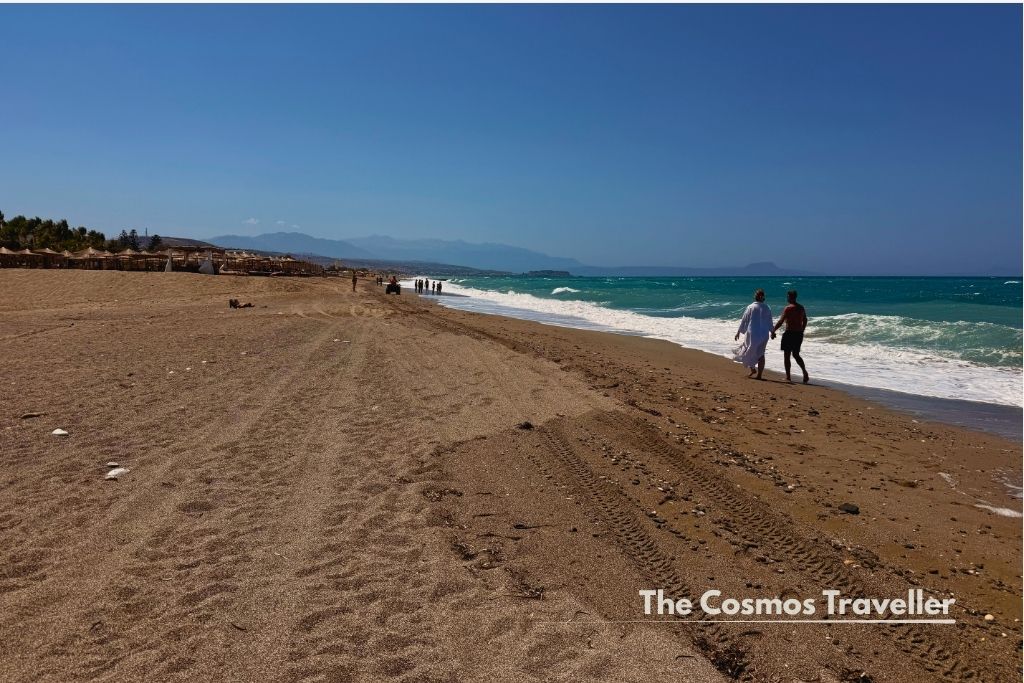
If you’re prepared to drive a little further afield, the small resort of Bali has some beautiful beaches and coves worth exploring. Evita Beach (also known as Karavostasi) is a real treat. Bali is also home to the best Greek street food I’ve found on the island — Hellenic Street Food, right by the sea.
Preveli: Go Before the Tour Buses
Preveli really is a beach that should be seen. Located about 10km from Plakias on the south coast, this palm-lined beach is beautiful — the palms themselves (Phoenix theophrastii) are a rare species found only on Crete.
There are several ways to get there: bus tours run regularly from the north coast resorts, and boat tours run from both Plakias and Damnoni beaches.
However, to see it at its best, my golden rule applies: go early in the morning, as the sun rises, and you’ll have the beach almost to yourself. It’s just a short walk from the parking area at Dionyssos Beach, if you have your own transport to get there.
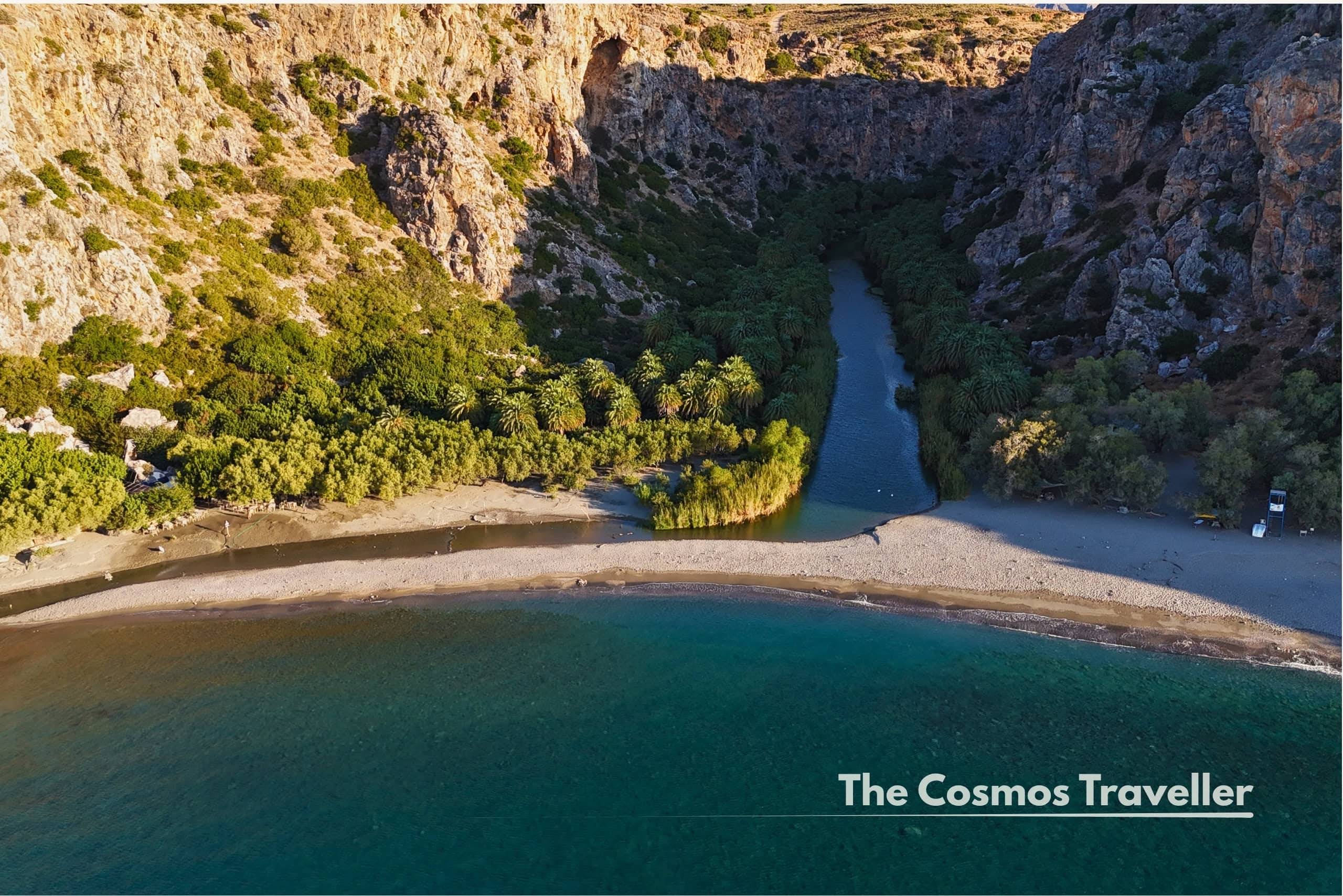
Even more rewarding is the hike down from the west side — expect steep stairs both down and back up, but you’ll catch the sun rising from behind the mountains as you descend.
It’s also worth walking a little way up the river from the beach on the east side, through the palm forest towards the small chapel of Agios Savvas — a quieter, shadier stretch of tranquility than the beach itself, and one most day-trippers never bother with.
I’d genuinely caution against visiting Preveli in the afternoon. In fact, I passed the parking area just yesterday, in July 2026, on my way to the quieter beaches near Agios Pavlos, and was genuinely shocked at how packed it was — cars were driving up and down looking for anywhere to park. I can only imagine what the beach itself was like.
If you want to discover other beautiful beaches in and around Plakias, check out my full guide here.
Getting To and Around Rethymno
🚗 By Car
I always fly into Chania and pick up a hire car straight from the airport — it’s my usual route into Crete every summer. I book through Auto Europe: they compare a good spread of both major and local providers, let you search for options without a deductible if that’s what you want, and their cancellation policy is generous if your plans shift.
Parking in the Old Town is hit and miss. If you’re lucky, you’ll find roadside parking around the Fortezza, and Parking Melisinou sits right by the fort itself. The last few times, I’ve parked outside the city centre instead — either Parking Lionis (📍Trantallidou 24, 741 32 Rethymno) or Safe Parking (📍Chatzimichali Giannari 37, 741 32 Rethymno; safe-parking.gr). Whichever you choose, be aware the cost climbs quickly the longer you stay.
🚍 By Bus
Two different KTEL companies cover this route, confusingly on two different websites — worth knowing before you start searching. KTEL Chania–Rethymno (e-ktel.com) runs buses from Chania to Rethymno for €7.80: either the direct route (1 hour 15 minutes, roughly hourly departures from 08:30 to 23:30) or the route via Chania–Rethymno–Heraklion (1 hour 30 minutes, roughly hourly departures from 04:30 to 22:30). Booking ahead is mandatory — online at e-ktel.com or by phone — since each bus only carries 50 seats and stops selling once full.
KTEL Heraklion–Lasithi (ktelherlas.gr) covers the Heraklion–Rethymno route separately: €9.90, 1 hour 30 minutes, departures roughly every 30 minutes from 05:30 to 22:30.
If you’re staying in Plakias, as I usually do, there’s no direct bus route to Rethymno — you’ll need your own car or a taxi.

Plan Your Trip With My Favourite Resources




FAQs
Is Rethymno worth visiting?
Yes — the Old Town’s Venetian and Ottoman architecture, walkable sights, and the Municipal Garden make it worth a full day, even if you’re not staying there.
Should I stay in Rethymno or just visit for the day?
I treat Rethymno as a day trip, not a base — I stay on Crete’s south coast instead, usually in Plakias, a 30-minute drive away.
Is Rethymno’s town beach worth it?
Not for me — the coastline either side of town is geared toward package holidays. If you want a swim after sightseeing, Platanes beach, a few kilometres east, is a better bet.
Rethymno or Chania — which is better to visit?
Both, if you can. I prefer Rethymno’s Old Town streets, but Chania has the better harbour — it’s a genuinely lovely walk out to the lighthouse there. Different strengths, not a straight swap.
How many days do you need in Rethymno?
One. This guide covers what you can genuinely see in a single day — the sights earn a visit, not a stay.
What’s the best time of year to visit Rethymno?
Shoulder season — I’d aim for May, June, or September, mainly to avoid the intense July and August heat. It also means fewer crowds — I saw first-hand how packed Preveli’s car park gets in peak summer.
Is Rethymno good for older or independent travellers?
Yes — the Old Town is compact and walkable, with shaded spots like the Municipal Garden to rest along the way, and the sights are close enough together that you don’t need to rush.
The Wrap Up
Rethymno rewards a slow walk more than a long stay. Start at the Fortezza before the heat builds, work your way down through the Old Town at your own pace, and finish under the trees in the Municipal Garden — that’s really the whole day, and it’s enough.
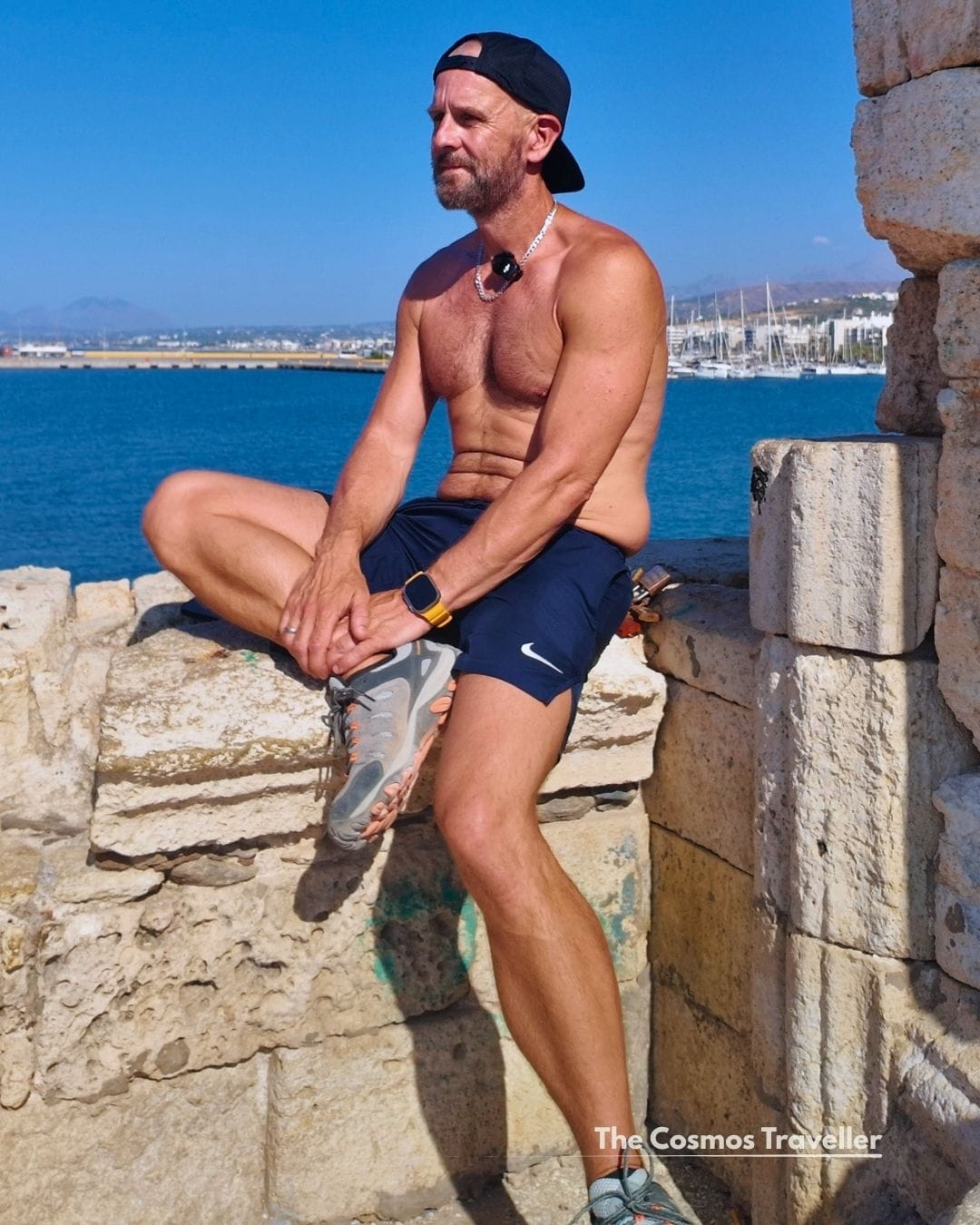
I still go back every summer I’m in Crete, and it’s never once felt like I’d already seen it. There’s always a street I hadn’t walked, or a bench I hadn’t sat on, or — this year — an old woman filling her water bottle from a fountain that’s been doing exactly that for four hundred years.
Skip the beach. Come for the city instead.
👇🏼 Save this guide, share it with your travel companions, and don’t forget to pin, post, or message it to yourself for later.

Written by Richard Hoskisson
After 22 years based in Dubai, I’m now settled on the French Riviera, with long stretches in Crete each summer and Cape Town each winter. I write candid, first-hand travel guides from wherever I actually am.