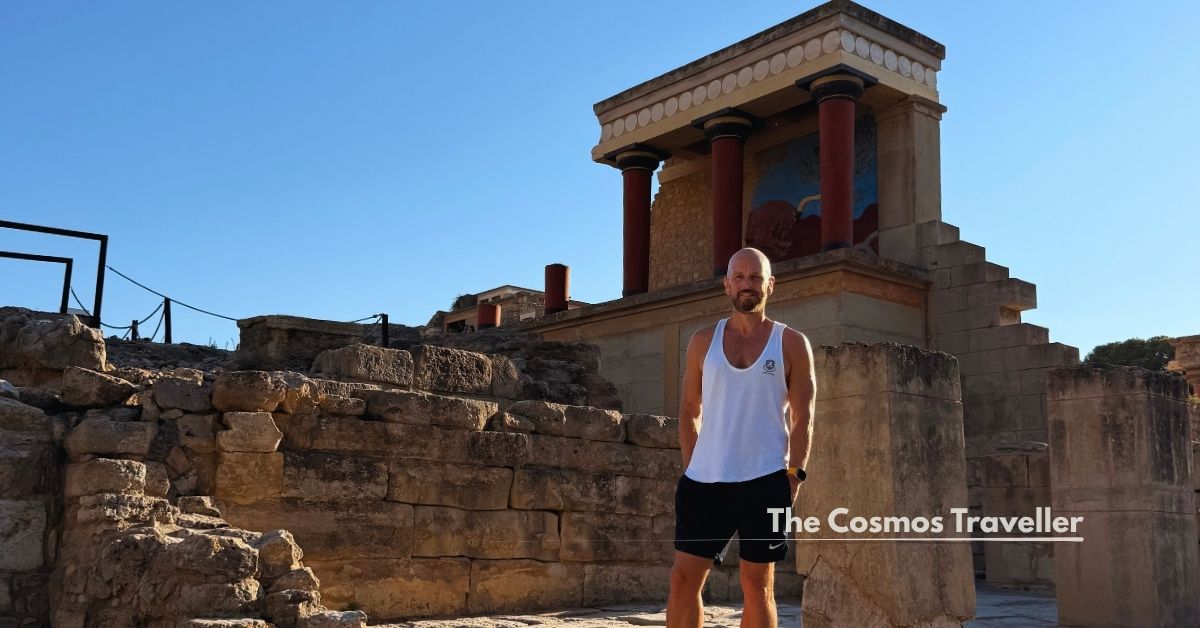

Last Visited: August 2026
I first visited Knossos in 1988, on a family holiday, and the memory of the throne room and those blood-red columns stayed with me for more than three decades. When I finally went back — my first return since childhood — I knew the experience would be different this time; tourism on Crete has grown enormously in the years between. So I stayed the night before in Bali, on the north coast, for a short drive to be through the gates by 8am. It worked — It worked, and stepping through the gates again, decades on, felt like no time had passed. When I left around two hours later, the queues at the gates and an overflowing car park confirmed the early start had been the right call.
This year, back in Crete for what’s now my regular July–August stretch, I wanted to test the other end of the day: whether arriving in the last couple of hours before the 8pm close — with the light dropping, and the coach parties gone — would beat the queues and crowds better than opening time ever did. Two visits, years apart, both strategies tested properly. Here’s which one actually wins for me.
Quick Facts – Morning or Evening at Knossos?
✅ Tested both: 8am opening (2 years ago) vs. 6pm closing (2026)
🏆 Which won: evening — no queue, next to no crowds, just one tour group
🕐 Last admission ~19:30–19:45, closes 20:00 (Apr–Aug) – allow at least one hour to visit
🎟️ €20 per adult, paid at the gate — no advance booking needed
☀️ Bonus: evening dodges the midday heat-closure risk which occurred on 22 July 2026
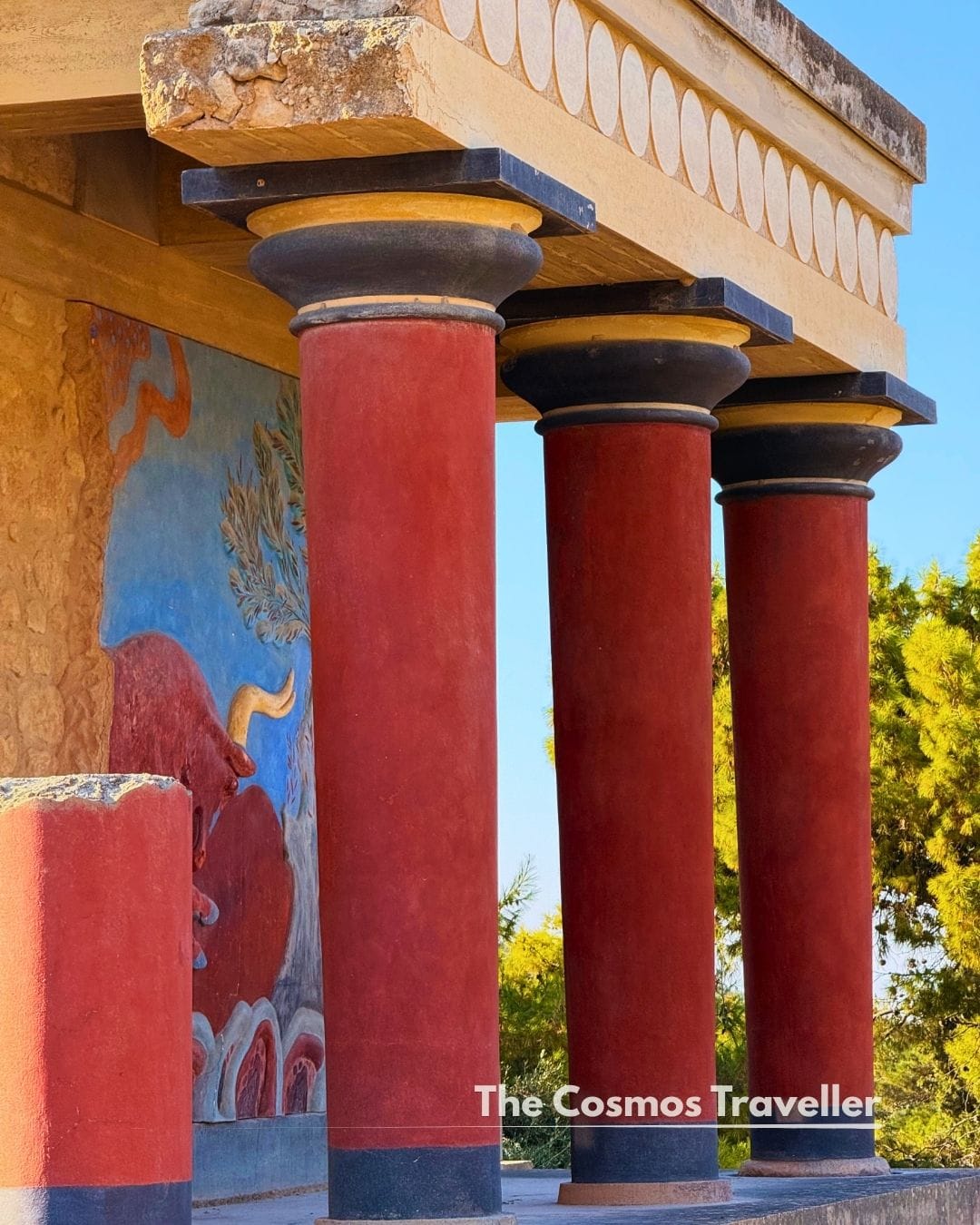
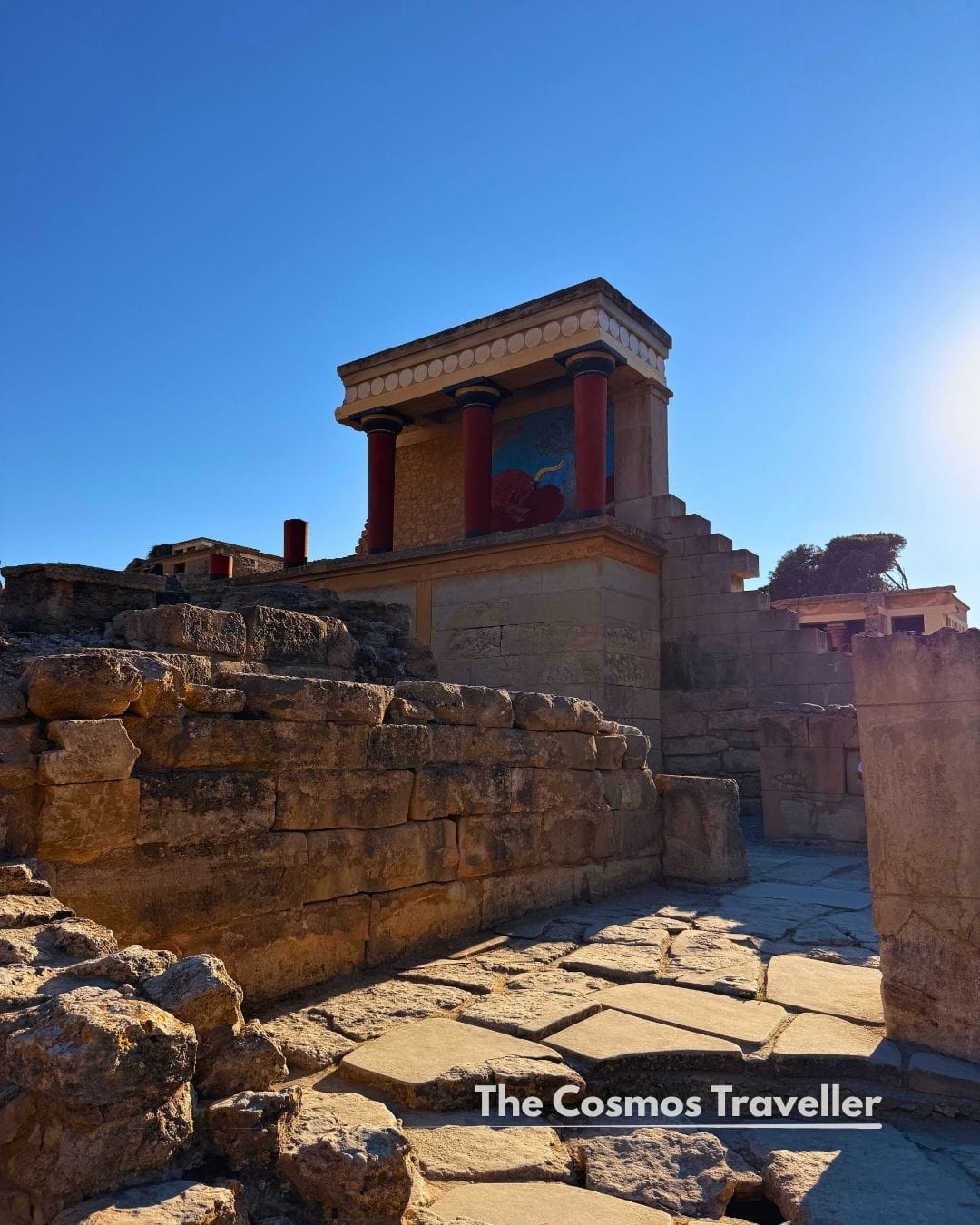
📸 One catch: low sun puts the three columns directly into the light for photos
✉️ Get more honest Crete guides like this one — join my list
Morning or evening — which actually beats the Knossos queue?
I’ve done the 8am opening, and thoroughly enjoyed it. I’ve now also stood there at 6pm, closing in on an hour or two before the palace shuts, in peak August season. The evening won, decisively — no queues, the heat dropping fast, only one tour group there at the same time, and the site emptying out steadily around me.
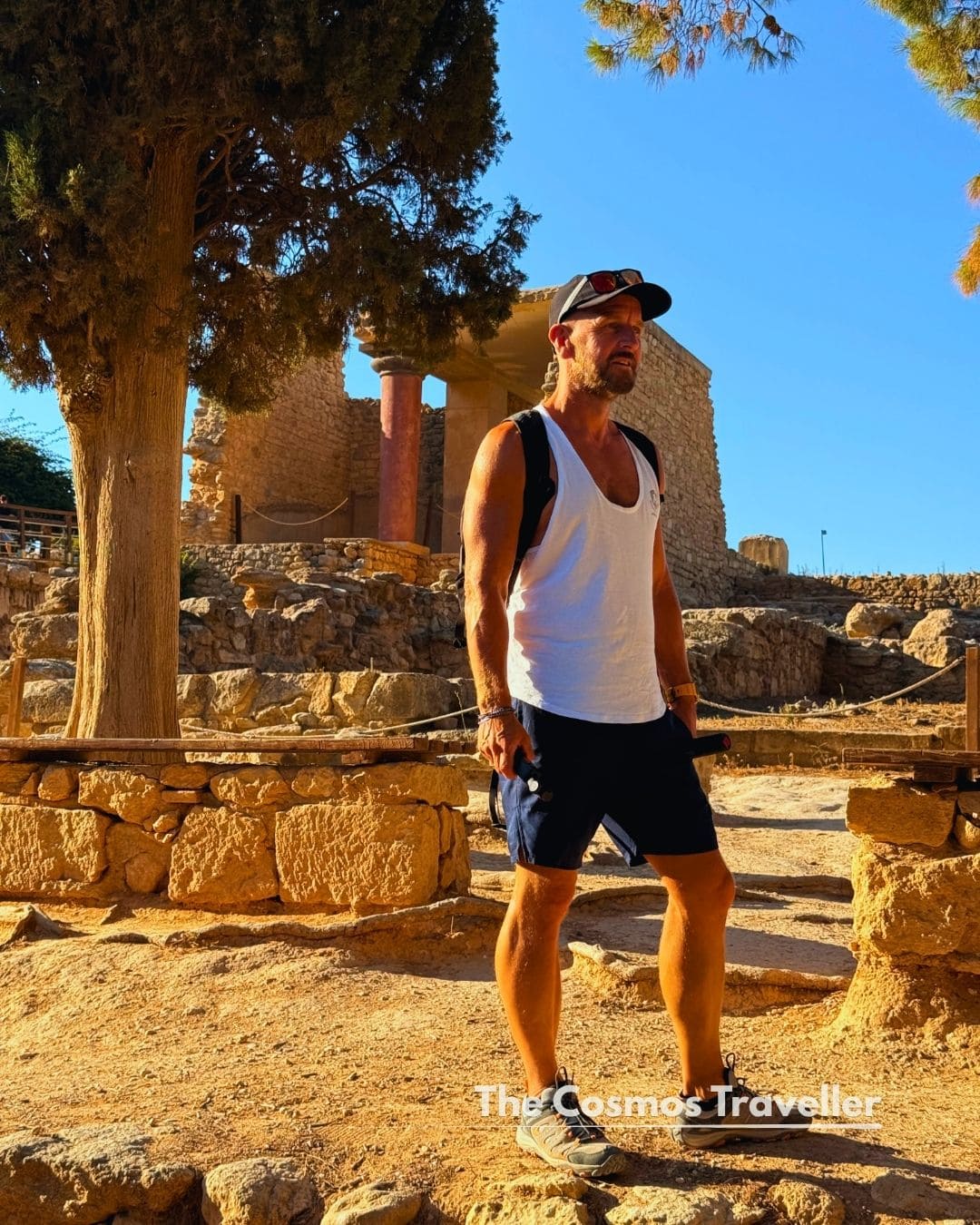
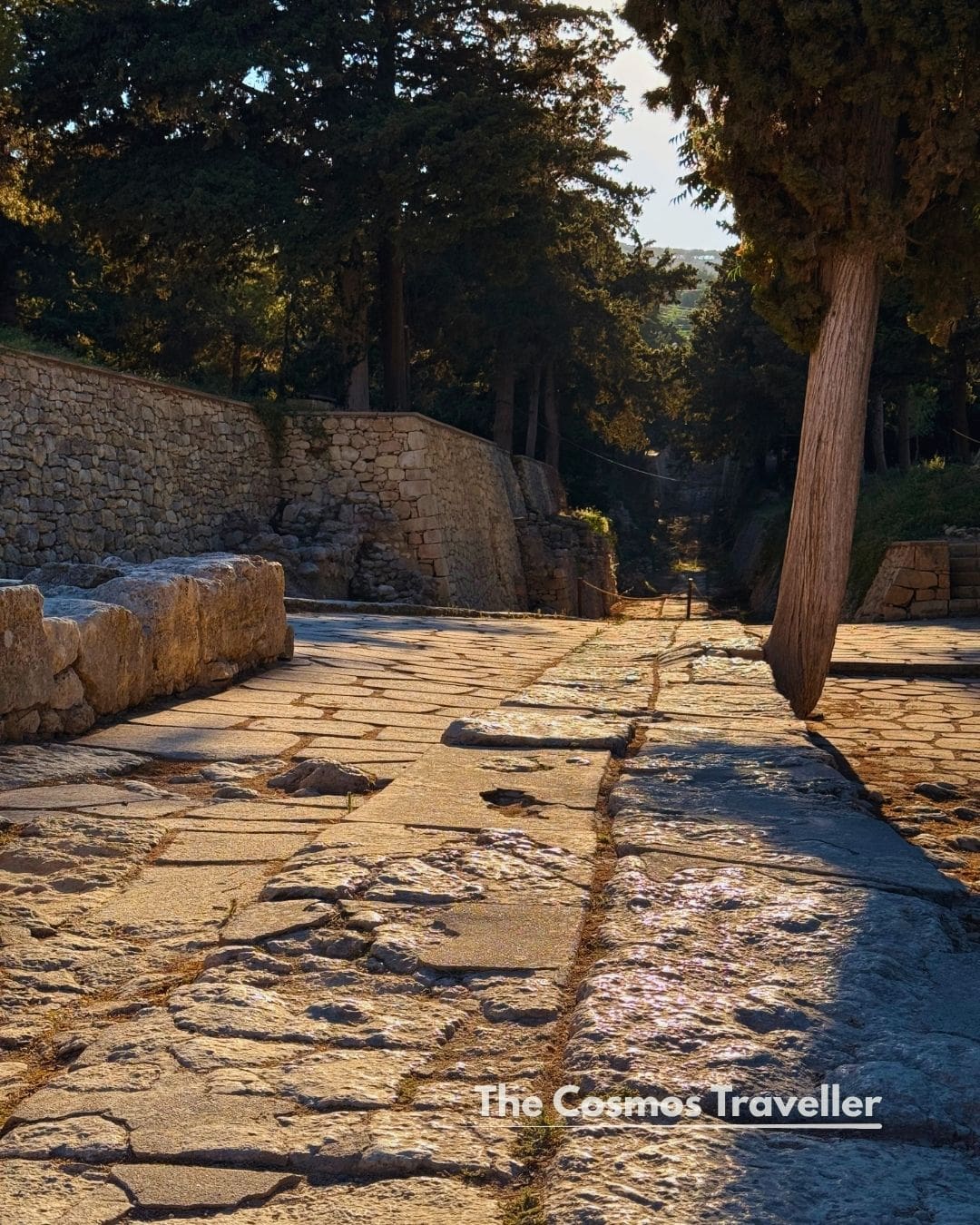
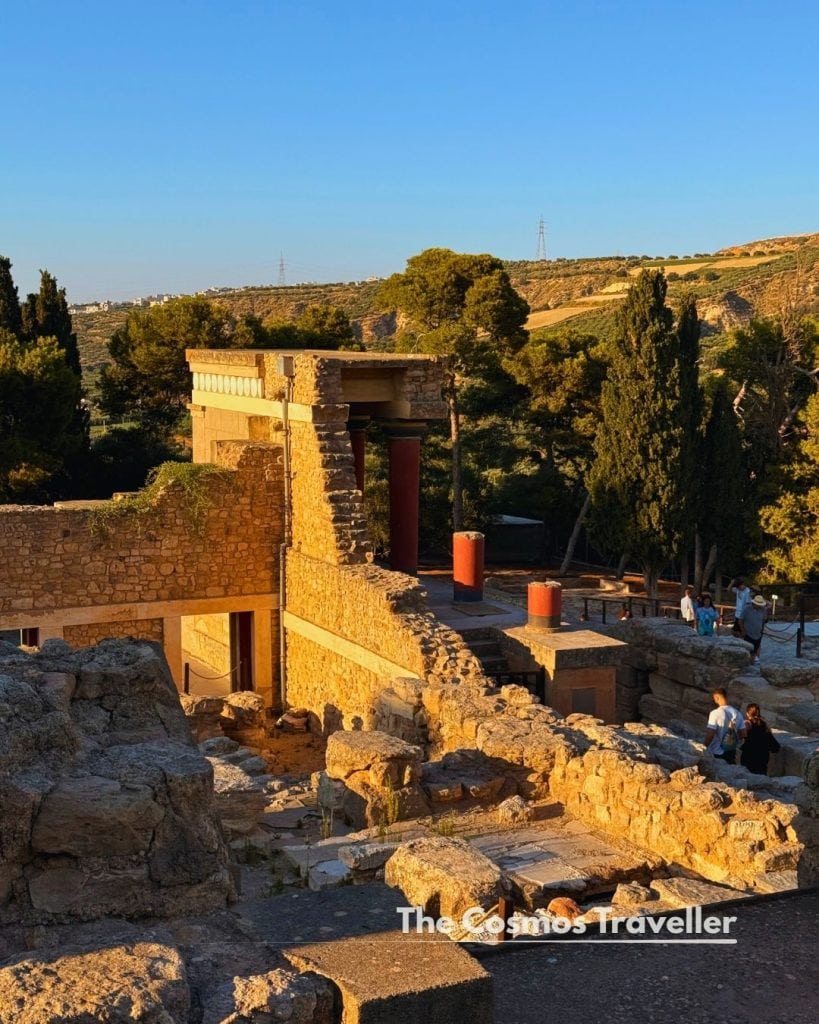
Because it was thinning out, there were spots where I could sit for a few minutes in the shade of the stone pines, listening to the cicadas, and just take in the scale of the place — easier, oddly, to picture it as it once was with no one standing in the frame. That same emptiness meant I could finally get the shots I’d wanted the first time round: the main sites without a throng of unknown tourists wandering through them.
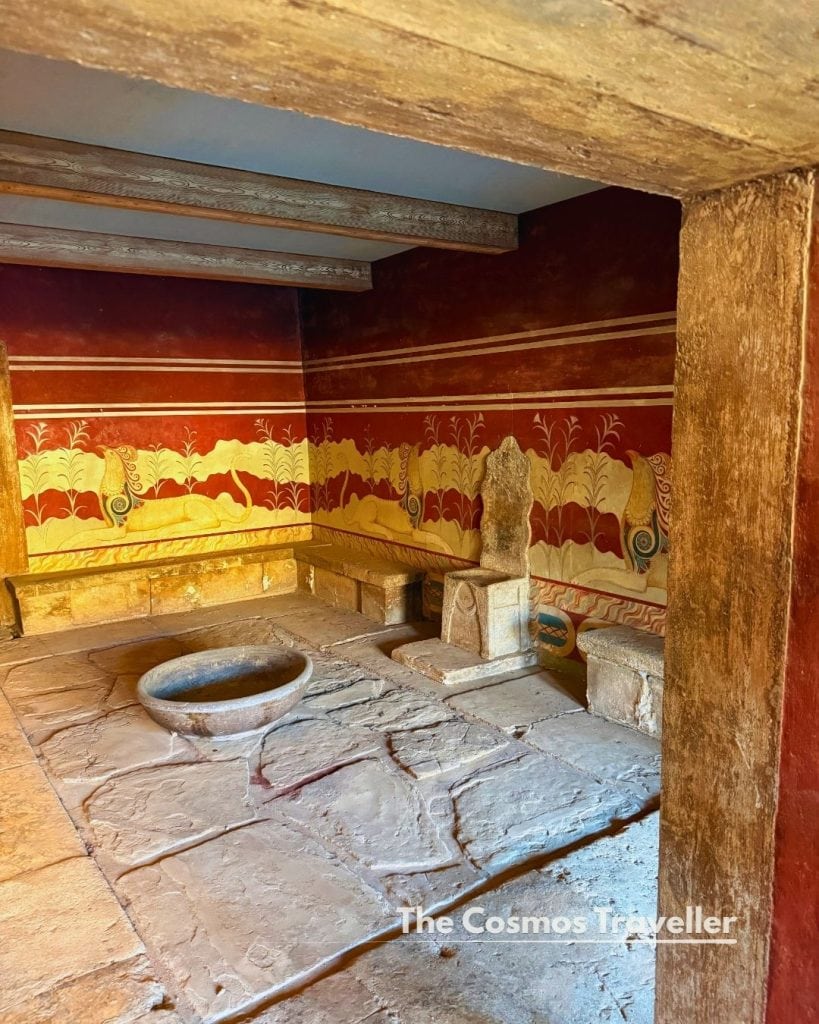
What does Knossos look like at 8am opening?
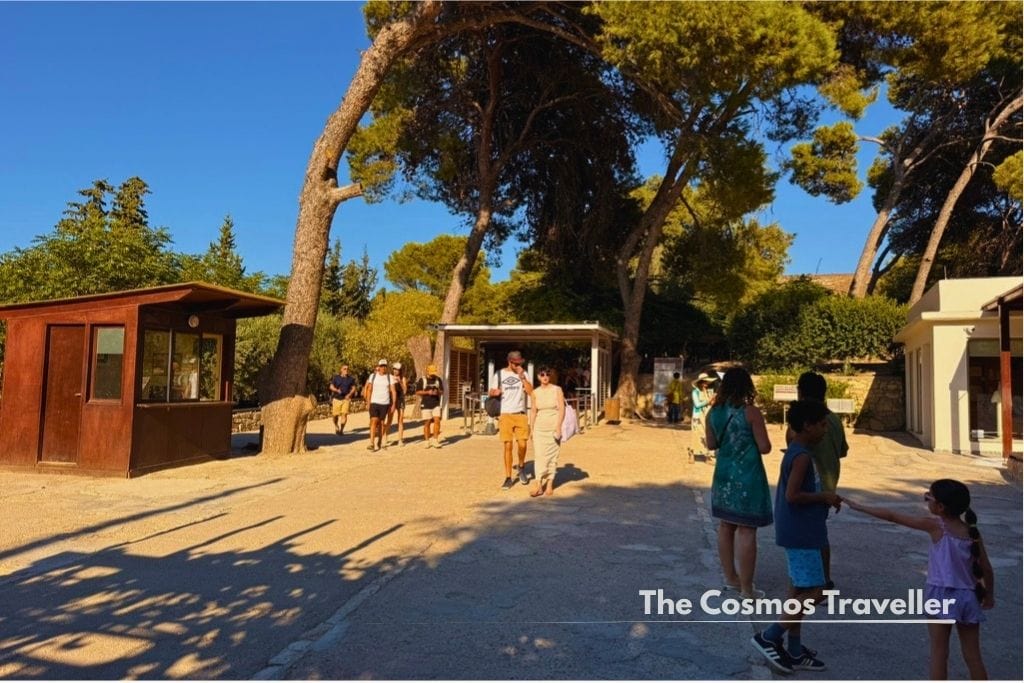
Arriving at 8am for opening was exciting — being among the first through the ticket booth and into an all-but-empty car park felt like getting away with something. But there was a real edge to it too: watching more cars fill in behind me, knowing the count would keep climbing all morning, brought a low hum of urgency — reach the main sites before the crowds and the heat caught up, or lose the advantage I’d arrived early for.
What does Knossos look like arriving at 6–6:30pm?
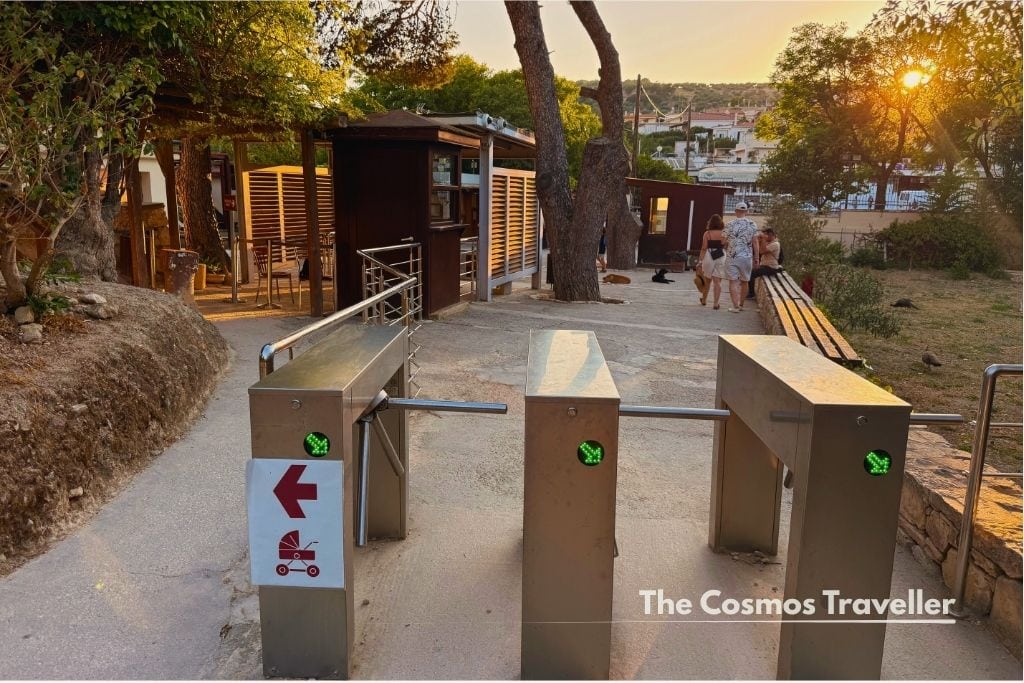
Arriving at 6pm was a completely different experience. The car park was near-empty, with cars leaving rather than arriving, and only a handful of people were making their way toward the entrance. There was no queue to buy a ticket or get through the gate, and the whole place felt far more tranquil than it had at 8am.
I couldn’t quite believe I hadn’t tried this years ago.
Do you need to book Knossos tickets in advance?
No — you can simply pay at the gate.
I nearly booked through a third-party site that looked official at a glance, until I spotted it was charging a €6 markup over the real price. In the end I skipped booking altogether and paid at the gate — the same as I did on my 8am visit two years ago. Greece hasn’t moved to a system where you’d be turned away without a pre-booked slot, whatever some booking sites imply.
Good to know:
- Official ticket price: €20 full / €10 reduced
- Only official online channel: etickets.tap.gr
- No advance booking or timed slot required — confirmed on two visits, two years apart
Does either strategy have a downside worth knowing?
Neither is a dealbreaker, but each comes with a small catch.
Morning’s is the one already obvious from that hum of urgency in the car park — you’re racing the crowds rather than avoiding them entirely. Evening’s is different: with the sun dropping in the west, the same light that made the empty site so atmospheric worked against me for photos, putting the famous three columns straight into the glare.
At A Glance
| 8am Opening | 6pm Evening | |
|---|---|---|
| Crowds | Building steadily behind you | Near empty thinning out significantly |
| Queue | None to get in, but growing to buy tickets as the morning goes on | None at any point |
| Heat | Cool at first, rising fast | Dropping significantly during the visit |
| Time to allow | 90 mins to enjoy the site completely | Minimum 1 hour, worth staying longer to really experience no crowds after 7:30pm |
| Ticket | €20 per adult, pay at the gate | Same |
| Winner | ✅ |
FAQs – Visiting Knossos
Is it better to visit Knossos in the morning or evening?
Evening, based on two tested visits two years apart — arriving around 6pm gave a near-empty site with no queue, while 8am opening still means racing the crowds arriving behind you.
How late can you enter Knossos before closing?
Last admission is around 19:30–19:45 with an 8pm close from April to August, per the official Ministry of Culture schedule. But I recommend you allow yourself one hour absolute minimum to fully enjoy the site.
Do you need to book a timed-entry slot for Knossos?
No — tickets can be bought at the gate for €20 per adult, confirmed on two visits two years apart with no pre-booked slot required. Be wary of third-party sites that look official but charge a markup — I nearly booked through one myself before spotting a €6 premium. Skip booking altogether and pay at the gate, or use the genuine Ministry of Culture portal, etickets.tap.gr if you’d rather book ahead.
The Wrap Up
Whichever time you choose, Knossos earns the visit on its own — the largest of the Minoan palaces, the legendary home of the Labyrinth and the Minotaur, and home to what’s considered the oldest throne room in Europe. The question isn’t whether to go, it’s when to arrive to actually beat the queue and enjoy it once you’re there.
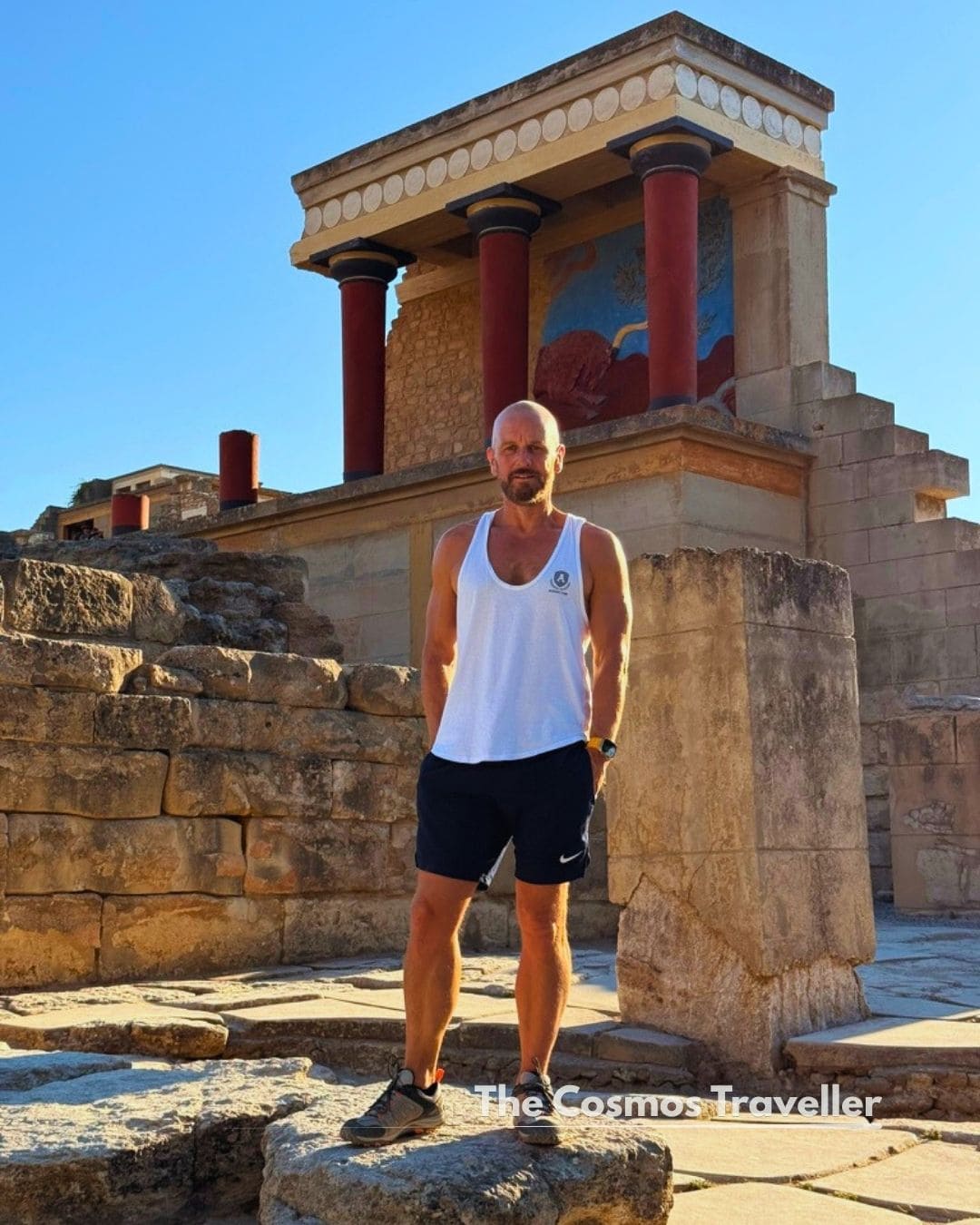
Between the two times I have visited (early morning and early evening), the evening wins for me: fewer people, cooler air, and a stretch of quiet inside the site I never got at opening time. Morning still has its place — if getting up at dawn is no hardship for you, arriving first still beats arriving mid-morning by a wide margin. But given the choice between the two, the last couple of hours before closing is the Knossos I’d go back for — the quiet one that finally matches the palace I’ve remember visiting as a child.
If you’re building this into a longer stay, I’ve mapped out a full week in Crete and where to actually stay beyond the big resorts — and if ruins aren’t enough history for one trip, Spinalonga is worth the detour too.

Plan Your Trip With My Favourite Resources







👇🏼 Save this guide, share it with your travel companions, and don’t forget to pin, post, or message it to yourself for later.

Written by Richard Hoskisson
After 22 years based in Dubai, I’m now settled on the French Riviera, with long stretches in Crete each summer and Cape Town each winter. I write candid, first-hand travel guides from wherever I actually am.