

Souks in Dubai: 2026 Guide to Gold, Spice & More
Curious about where to find the real Dubai — beyond the shopping malls and skyscrapers?
The traditional souks of Old Dubai are the city’s oldest marketplaces, still buzzing with colour, scent, sound, and stories.
Whether you’re drawn to the glitter of the Gold Souk, the scent trails of the Spice Souk, or the atmospheric alleys of Bur Dubai’s Textile Souk, this is where you’ll get a glimpse of the Dubai that existed long before the skyline.

Plan Your Trip With My Favourite Resources







Over my two decades living in Dubai, I’ve walked these markets countless times — with friends, family, and visiting guests. In this guide, I’ll help you plan your own visit to the souks in Dubai: what to see, where to go, how to get there, what to buy (and how to haggle), plus the best way to soak in the magic of Old Dubai — whether you have a full day or just an afternoon.
✅ Quick Facts – Visiting the Souks in Dubai
📍 Main area: Deira + Bur Dubai, along Dubai Creek
🛶 Abra ride: 1 AED traditional boat crossing — don’t miss it
💰 Best value: Perfume & Spice Souks for souvenirs
💎 Must-see: Gold Souk – iconic, extravagant displays
🧵 Textile tip: Head to Bur Dubai for fabrics + pashminas
🕒 Opening hours: Mornings to late evenings; after 3pm Fridays
🎒 Best for: Culture lovers, solo travellers, photographers
🌡 Summer note: Open year-round — go early or after sunset
🧭 Itinerary help: Use my self-guided walking route to explore in 2–3 hours
Planning Your Visit to the Souks in Dubai
Planning your visit to the souks in Dubai is all about timing, location, and knowing how to get around. Whether you’re mapping out a full morning on both sides of Dubai Creek or just want to dip into one or two markets, this section will walk you through everything you need to know — from where the souks are, to how to get there, to when to go for the best experience.

What Are the Souks in Dubai?
Established on the banks of Dubai Creek in the neighbourhoods of Deira and Bur Dubai, where trade once thrived and laid the foundation for Dubai’s rise, the city’s traditional souks are a feast for the senses. Imagine a spectacle full of colour, scent, texture, and local life.
The word souk (or souq) means marketplace in Arabic. Historically, it referred to the open-air markets where traders from across the Arabian Gulf region, India, and East Africa came to sell spices, textiles, gold, and perfumes.
Today, you’ll find two main types of souks in Dubai:
- Traditional souks — like the Gold Souk, Spice Souk, Perfume Souk, and Textile Souk in Old Dubai (Deira and Bur Dubai)
- Modern-style souks — newer developments that recreate traditional architecture and atmosphere, such as Souk Al Bahar (Downtown), Madinat Jumeirah, and the waterfront lanes of Al Seef (adjacent to the heritage district of Al Fahidi)
Even if you only have an afternoon, visiting a few of these will give you a richer, more authentic sense of the city beyond the malls and skyscrapers.
Where Are the Souks Located?
The traditional souks of Dubai are clustered around Dubai Creek, the historic waterway that once served as the city’s main trade route. You’ll find them on both sides of the creek:
- Deira side (north):
- Gold Souk
- Spice Souk
- Perfume Souk
(Nearest metro: Al Ras)
- Bur Dubai side (south):
- Textile Souk
- Al Fahidi Historical District
(Nearest metro: Al Fahidi)
You can easily travel between the two by abra boat — a short, scenic ride across the creek that costs just 1 AED or 2 AED if you want to cross directly from Al Seef/Al Fahidi.
In addition to these heritage areas, Dubai has also developed several modern-style souks that echo the design of the old markets:
- 🕌 Souk Al Bahar (Downtown Dubai)
- 🌴 Madinat Jumeirah (near the Burj Al Arab)
- 🌊 Al Seef (along the Bur Dubai waterfront)
These are more tourist-friendly and ideal if you’re short on time, but nothing beats the atmosphere of the original souks along the Creek.
Map of Souks in Dubai
You will find each souk pinned in my Google Map below.
⭐️ Tip: Click the star icon on the map title bar (“Souks in Dubai”) to save this map to your Google account for easy access later.
🕰️ When to Visit the Souks in Dubai
Dubai’s souks are open year-round, but when you go can make all the difference to your experience — especially if you’re visiting on foot.
🌅 Best Time of Day
- Morning (after 10:00 a.m.):
Most souks don’t open until 10:00, so there’s no need to arrive too early. Mornings offer a cooler, quieter experience — especially if you’re exploring both sides of the creek.
💡Top Tip: Park at Al Seef if coming by car — access is usually allowed from 10:00 a.m. - Evening (after sunset):
Especially during the winter months (Nov–Feb), evenings along the Creek are incredibly atmospheric. While the Deira souks can get crowded, the lights, call to prayer, and waterfront breeze offer a magical backdrop.
🔥 Visiting in Summer?
If you’re visiting between May and September, avoid midday and early afternoon. The open-air markets — particularly the Textile and Spice Souks — can get extremely hot and stuffy, even with fans running.
Plan to arrive around 10:00–10:30 a.m., and aim to finish by 12:00 noon.
Personal note: I’ve done the full walking route in late September — and while it’s doable, I was definitely ready for air conditioning by midday!
🚇 How to Get to the Souks in Dubai
Dubai is well-connected, but traffic and heat can add complexity — planning ahead is key. Luckily, the souks are among the easiest places to reach by metro, taxi, or even boat.
🚆 By Metro
The Dubai Metro is fast, air-conditioned, and stops near all major souk areas. Use:
- Al Ras, Gold Souq, or Baniyas Square for the Deira souks
- Al Fahidi, Al Ghubaiba, or BurJuman for the Bur Dubai side
From there, it’s a short walk through the older parts of town to reach the markets.
🚖 By Taxi or Ride App
RTA Taxis and apps like Careem or Uber are widely available and affordable. They’re especially handy if you’re starting your day from areas like Downtown, JBR, or the Palm.
🛶 By Abra Boat
To travel between Deira and Bur Dubai, hop on a traditional abra — the 1 AED wooden boats that cross the Dubai Creek in under 5 minutes. It’s the most scenic way to arrive, and part of the full souk experience.
🕖 Tip: If you’re visiting both sides of the creek, aim to arrive by 10:00 a.m. — traffic builds quickly, especially on weekdays.
Top Souks in Dubai to Explore
From gold and spices to fabric, perfume, and souvenirs — these are the main souks to visit in Dubai, with a few modern additions worth considering. You can visit them all in a day if you plan well.
👉🏽 Prefer a guide? Skip the stress and take a walking tour instead — it’s the best way to soak in the stories and avoid getting lost.

1. Gold Souk – Deira
Fancy treating yourself to an extravagant gift?
The Gold Souk in Deira is one of Dubai’s most iconic and longstanding markets — and for good reason. Everything that glitters and sparkles is on display, from intricate gold bangles to diamonds and pearls, with generations of traders having sold jewellery here under the watchful eye of Dubai’s regulators.
I’ve been coming here for over 20 years — and whenever my mum visited, this was always at the top of her list.

🎁 Looking for a special souvenir?
You’ll find gold sold by weight, with ever-changing designs and skilled craftsmanship on offer. While the displays are dazzling, you don’t need to be a millionaire — there’s something for most budgets – just be ready to haggle.
⚠️ Shop with confidence: All merchandise is regulated by the Dubai Government and clearly hallmarked. Your consumer rights are protected — read more here.
💡 Top Tip: Don’t be afraid to haggle! Start at 50% of the asking price and enjoy the performance — it’s part of the experience.

2. Spice Souk
Let your senses lead the way.
The Spice Souk in Deira is a feast for the senses — vibrant, aromatic, and full of old-world charm. Vendors here have been trading for decades, often with spices passed down through generations. They’re passionate about their craft and more than happy to explain the uses of saffron, sumac, cinnamon, cardamom, frankincense, and more.
It’s easy to imagine camel caravans and dhows bringing these ingredients from India, Africa, and Persia, just as you inhale the warm blend of scents spilling out from woven baskets.

Take your time browsing, sniffing, and tasting. This is the place to pick up authentic flavours to bring home — edible memories of Arabia.
💡 Top Tip
Visit late afternoon for golden-hour photos and a magical Abra ride back to Bur Dubai as the sun sets behind the minarets and skyline.

3. Perfume Souk
⭐️ Perfume Souk Quick Facts
📍 Located on the Deira side of Dubai Creek (close to the Gold and Spice Souks)
🕒 Timings can vary between 10am – 10pm
ℹ️ Getting There
🚇 8-minute walk from Baniyas Square Metro Station
🚌 Bus Routes 13D, 27, 4, 64, 8 stop near the Perfume Souk
⛴️ Abra from Bur Dubai followed by a short walk from the Marine Station
Follow the scented trail!
There’s something irresistibly exotic about the Perfume Souk in Deira — where centuries-old Arabian scents linger in the air. It’s one of the most atmospheric corners of Old Dubai, where perfume is not just a luxury but a deep-rooted part of daily life and heritage.
As someone who spent many hours coaching students in Emirati homes, the smells here take me right back — warm hospitality, ceremonial rituals, and a deep love for fragrance woven into the fabric of everyday life.

You’ll learn about oud and bakhoor, beloved staples of both men’s and women’s scents, and explore perfumes in every form — from oils and powders to crystals and incense wood.
💡 Top Tip
Try blending your own signature scent using notes like musk, amber, rose, and saffron. It’s a unique way to bring home a fragrance that’s truly yours — and you’ll often find vendors happy to help you craft it.

4. Textile Souk (Bur Dubai)
⭐️ Textile Souk Quick Facts
📍 Located on the Bur Dubai side of Dubai Creek
🕒 Timings can vary between 10am – 10pm
⭐ Getting There
🚇 10–15 mins walk from Sharaf DG and Al Ghubaiba Metro Stations
🚌 Bus Route F70 stops closest to the Textile Souk
⛴️ From Dubai Marina, take the water taxi to Deira Old Souk Station, then hop on an abra across the Creek to Bur Dubai
Looking to add something unique to your wardrobe — or your home?
Step into a kaleidoscope of colour at the Textile Souk, where rows of raw silks, vibrant cottons, and intricate embroidered fabrics line the alleyways. You’ll find sequins, buttons, lace, and embellishments galore — plus skilled tailors (often of Indian heritage) ready to stitch you a bespoke creation on the spot.

I remember coming here over 20 years ago, hunting for curtain fabric — and honestly, the charm of this place hasn’t faded one bit.
💡 Top Tip: Combine your visit with the Al Fahidi Historical Neighbourhood, just around the corner. Don’t miss Sheikh Saeed Al Maktoum’s House — the beautifully restored residence of the grandfather of Dubai’s current ruler. It’s a quiet gem full of history.
5. Al Seef Waterfront Area (Modern twist on tradition)
Al Seef remains one of my favourite places to explore — especially after a stroll through Al Fahidi Historical District (Bastakiya as it used to be known).
Opened in 2019, Al Seef was designed to reflect the soul of old Dubai — and they’ve done it beautifully. From weathered walls and vintage telephones to buzzing oscillating fans and traditional mosque domes, the craftsmanship here is stunning.


The souk offers a charming mix of traditional Arabian design with modern amenities, making it a perfect gateway to the older souks across the Creek.
🛍️ You’ll find authentic Emirati restaurants, quirky souvenir shops, and artisan boutiques — though sellers can be a little more assertive here than in the traditional souks, especially with tourists. Still, it’s a relaxing, atmospheric place to wander and soak up the culture.
💡 Top Tip
Start your day here! Arrive just after 10am when it opens (earlier entry is blocked at the parking barriers), and enjoy the peace before the crowds descend. By the time you reach the Creek to take an abra across to Deira, the Spice and Gold Souks will be in full swing.


6. Souk Madinat Jumeirah
Souk Madinat Jumeirah was the first of Dubai’s “new traditional” souks — built in the early 2000s to replicate the feel of an old Arabian market, with a touch of modern elegance.
Nestled between the Al Qasr and Mina Al Salam hotels, the souk offers a maze of shops, restaurants, and bars set among wooden arches, lantern-lit alleyways, and serene canals.


Whether you’re shopping for spices, local crafts, or jewellery, you’ll find high-quality souvenirs in a relaxed, air-conditioned space — ideal for those staying in Palm Jumeirah or Dubai Marina.
💡 Top Tip
Come at sunset to see the golden light bouncing off the traditional architecture — and don’t forget to step outside for a perfect view of the Burj Al Arab, especially stunning after dark.
7. Souk Al Bahar – Tradition Meets Downtown Glamour
⭐️ Souk Al Bahar Quick Facts
📍 Located in the heart of Downtown Dubai, close to Dubai Mall and Burj Khalifa
🕒 Timings can vary between 10am–11pm for shopping and 8am–2am for F&B
ℹ️ Getting There
🚗 Free parking available at Souk Al Bahar (validate your parking at a food outlet such as Time Out Market) and Dubai Mall
🚶 15-minute walk from Dubai Mall Metro Station (walk through the mall in summer for air conditioning)
Looking for the perfect blend of heritage and high-rise glamour?
Souk Al Bahar is one of my favourite places in Dubai. I lived in the Dubai’s Old Town (Downtown) for 12 years, and this was my go-to spot — not just for shopping and dining, but for that special contrast between old-world charm and modern sparkle.


Step through its grand arched entrances to discover:
- ✨ Traditional Arabic design with lantern-lit walkways and vaulted ceilings
- 🏙️ Panoramic views of the Burj Khalifa rising above the azure lake
- 🛍️ Souvenir shops, homewares, spices, and the hidden gem: the Sailor’s Market
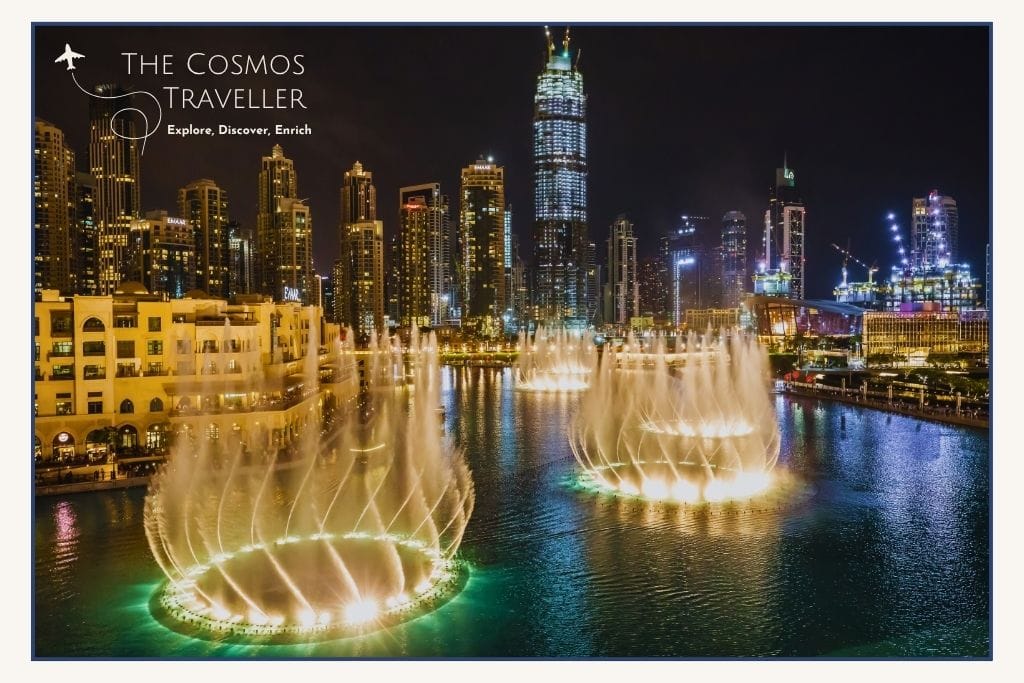
One of the highlights of visiting is the Time Out Market, where Dubai’s best independent restaurants are gathered under one roof. It’s informal, lively, and licensed — perfect for lunch or an evening out. I’ve spent countless evenings here catching up with friends.
💡 Top Tip – Head to the outdoor terrace of Time Out Market at sunset for unbeatable views of the Dubai Fountain.

⚠️ Fountain Update – From April 2025, the Dubai Fountain was temporarily closed for essential maintenance. The full show is reopened in Autumn 2025, with enhanced waterworks and a refreshed lake experience.
A Cultural Detour: Al Fahidi Historical District & The Centre for Cultural Understanding
Just steps away from the Textile Souk and Al Seef, the Al Fahidi Historical Neighbourhood (often called Bastakiya) offers one of Dubai’s most atmospheric cultural experiences.

Wander the quiet laneways lined with restored wind-tower houses, art galleries, and boutique cafés — a sharp contrast to the bustling souks nearby. This was always a favourite destination for my students when I taught in Dubai. Many couldn’t believe there was an “old” Dubai hidden behind the skyscrapers.
📍 Don’t miss the Sheikh Mohammed bin Rashid Centre for Cultural Understanding.
With its Open Doors, Open Minds philosophy, the centre welcomes visitors to learn about Emirati life through food, dialogue, and cultural Q&A sessions.

💡 Top Tip: If you’re lucky, catch a talk with Ahmed or Latifa (formerly Tracy) — two of the centre’s most engaging presenters. You’ll leave with a much deeper understanding of the UAE’s values and traditions.
A Little History of the Souks
The word souq (or souk) simply means market in Arabic. In the past, visits to the souk were part of daily life across the Emirates.
In Dubai, many of the original souks were built around Dubai Creek — the city’s historic trading port that linked the Gulf with merchants from India and beyond. In the 1960s, the creek was dredged to welcome larger vessels, and trade boomed. This is where Dubai’s transformation truly began.
Today, these bustling souks on either side of the creek are a living connection to that past — and one of the best ways to experience a very different side of the city.

What to Expect at the Souks in Dubai
Visiting the souks in Dubai is a multi-sensory experience — vibrant colours, strong scents, and the hum of old-world commerce. Whether you’re haggling over spices, admiring gold jewellery, or hunting for a unique fabric, there’s a rhythm and energy that’s unmistakably Arabian.
What to Buy
Each souk offers something distinct – here’s what to look out for as souvenirs to take home:
- 👑 Gold (rings, bangles, necklaces)
- 🫚 Spices (saffron, za’atar, sumac)
- 👗 Fabrics (silk, cotton, lace)
- 👃🏼Perfumes (oud, bakhoor, musk)
- 🛍️ Souvenirs (camel figurines, incense holders, Arabic coffee sets)
How to Haggle (Without the Stress)
Haggling is part of the process when shopping at the souks in Dubai and can be a fun experience. From years of experience, here are my tried and tested rules to follow for haggling effectively:
- Start at 40–50% of the asking price.
- Smile — friendliness goes a long way.
- Walk away if you’re unsure (they will often call you back).
- Don’t haggle if you’re not seriously considering buying.
Dress Code & Cultural Etiquette
Dubai is relaxed by Middle Eastern standards, but modest clothing is appreciated in traditional areas.
- Use polite greetings — “As-salaam alaykum” goes a long way.
- Avoid short shorts and strapless tops.
- Cover shoulders and knees if possible.
- Be respectful when taking photos and always ask permission.
For a complete guide on Dubai Rules check out my guide here.
Should You Take a Tour of the Souks?
If it’s your first time in Dubai or you’d rather skip the logistics, a guided tour is a fantastic way to experience the souks. Knowledgeable guides can help you navigate the maze of alleyways and give cultural context you might otherwise miss.
Guided vs. Self-Guided
Guided: Hassle-free, cultural insights, better for first-time visitors
Self-Guided: More flexible, budget-friendly, ideal for return visitors
Why I Recommend This Walking Tour
This guided tour offers excellent value and is perfect for those who want to dive into Dubai’s cultural heritage without the stress of navigating the maze-like souks alone.
Run by a trusted local operator, the tour is led by knowledgeable guides who bring the old city to life with rich historical context and personal stories. Expect a thoughtfully curated itinerary that includes:
🧭 A walk through the winding alleys of Al Fahidi Historical Neighbourhood
🛍️ Visits to the Gold, Spice, and Textile Souks — with guidance on how to haggle
🍢 Tastings of local Emirati snacks and street food
🛶 A traditional abra ride across Dubai Creek
💡 Please note: The Dubai Museum is currently closed for extensive renovations. The tour focuses instead on immersive storytelling and other nearby heritage sites within Al Fahidi Historical District.
If you’re short on time or prefer a more structured experience, this tour is a fantastic way to discover the “real” Dubai beyond the skyscrapers.
Run by a trusted local operator, the tour is led by knowledgeable guides who bring the old city to life with rich historical context and personal stories. Expect a thoughtfully curated itinerary that includes:
🧭 A walk through the winding alleys of Al Fahidi Historical Neighbourhood
🛍️ Visits to the Gold, Spice, and Textile Souks — with guidance on how to haggle
🍢 Tastings of local Emirati snacks and street food
🛶 A traditional abra ride across Dubai Creek
💡 Please note: The Dubai Museum is currently closed for extensive renovations. The tour focuses instead on immersive storytelling and other nearby heritage sites within Al Bastakiya.
👉🏽 Book your walking tour here — and experience Dubai like a local.


🗺️ Dubai Souks Self-Guided Tour
Would you like help planning an authentic excursion?
I’ve done the hard work for you. Below is my simplified half-day itinerary — perfect for a first-time visit to the souks. It’s easy to follow, takes in all the highlights, and works beautifully even in the summer heat (yes, I tested it!).
You’ll find this route blends local culture, history, and shopping — including an abra ride across the Creek, which is a must.
⚠️ Note: The word “souk” (or “souq”) reflects the Arabic pronunciation of the word for market. Both spellings are correct and used across the UAE.
🔍 Simplified for You — A Quick Half-Day Souk Itinerary
📍 Start at Al Seef
Take a taxi or drive — there’s easy underground parking. Wander the backstreets and admire the attention to detail: old telephones, mosque domes, and traditional Arabian architecture.
📍 Walk through to Al Fahidi Historical Neighbourhood (Al Bastakiya)
Explore restored wind-tower houses, museums, cafés and small boutiques. You’ll be surprised how quiet it can feel — a real hidden gem.
📍 Drop into the Sheikh Mohammed Centre for Cultural Understanding
If Latifa or Ahmed are speaking, don’t miss it. Their insights into Emirati life are powerful and memorable.
📍 Continue to the Textile Souk
Shop for colourful silks, buttons, and laces — or simply soak up the vibrant local atmosphere.
📍 Ride the Abra to Deira (CR1 route)
Hop on a traditional boat at Bur Dubai Marine Station. It’s 1 AED each way — bring coins or a NOL card.
📍 Explore the Deira Souks
Wander through the Perfume Souk, Spice Souk, and Utensils Souk. Breathe in the aromas and don’t be afraid to sample or ask questions.
📍 Finish at the Gold Souk
Even if you’re not shopping, it’s worth seeing. This is home to some of the most extravagant gold displays in the world.
📍 Return by Abra (CR5 route)
Head back across the water to Al Seef where you started — ideally around sunset for magical golden-hour light.
🛶 Traditional Abra Ride
No visit to the souks is complete without hopping on an abra — the traditional wooden boats used to cross Dubai Creek.
They’re quick, cheap (just 1–2 AED), and effortlessly scenic. You don’t need to book in advance — just show up at the jetty, pay the fare in cash, and enjoy the five-minute glide between Bur Dubai and Deira.

💡 Tip: For the most atmospheric ride, time your crossing around sunset — the golden light and gentle water breeze make for a magical experience.
FAQs – Visiting the Souks in 2026
Are the souks in Dubai open on Fridays?
Yes, but with slightly different hours. Many souks open later in the afternoon on Fridays due to Friday prayers. Aim for post-3 p.m. if you’re visiting on this day.
Do I need cash, or can I use a credit card?
Most shops accept card payments, but small vendors (especially in the spice and utensil souks) may only take cash. It’s best to carry a little AED in small notes or coins — especially for the abra ride.
What’s the best souk for souvenirs?
For traditional gifts like textiles, spices, oud, and Arabic décor, the Perfume Souk and Spice Souk are excellent. Souk Al Bahar is ideal for curated souvenirs in a more polished setting.
Can I visit the souks alone as a solo female traveller?
Absolutely. Dubai is extremely safe for solo travellers. You might get approached by shopkeepers, but a polite “No, thank you” goes a long way. Dress modestly and you’ll be fine.
Are the souks open in summer?
Yes — they operate year-round, but do note that some outdoor areas can be stifling in peak heat. Aim for morning or post-sunset visits in the summer months.
What time of day is best to visit the souks?
Mid morning (before noon) or golden hour just before sunset is ideal. Avoid the midday heat if you’re walking between souks.
Can I take photos inside the souks?
Generally yes, but it’s polite to ask — especially if photographing people or inside smaller shops. Vendors are usually happy if you’re respectful.
Final Tips for Visiting the Souks in Dubai
If you’ve made it this far — you’re ready. But before you step into the maze of scents, spices, and gold:
- 💡 Visit early or late to avoid both heat and crowds.
- 💡 Don’t skip the abra ride — it’s an atmospheric moment you’ll remember.
- 💡 Start at Al Seef for an easy, elegant introduction to souk culture.
- 💡 Short on time? Follow my simplified half-day itinerary — it’s field-tested and fuss-free.
And most importantly — go slow. The joy of the souks is in the wandering, the conversations, and the unexpected finds.
The Wrap-Up: My Final Thoughts
To truly discover a side of Dubai that many tourists miss, put the souks at the top of your list.
These traditional markets are a sensory delight — alive with colour, scent, texture, and history. Whether you follow my self-guided route or join a local walking tour, this is where the soul of Old Dubai still lingers.
The newer-style souks like Madinat Jumeirah and especially Al Seef are well worth a stop — combining authentic architecture with air-conditioned comfort and excellent dining. And Souk Al Bahar is a must for Downtown Dubai, offering front-row views of the Dubai Fountain from the Time Out Market terrace.
✨ Enjoy exploring these fascinating, historical, and yes — utterly photogenic — souks of Dubai.
🧳 Plan Your Trip to Dubai
Plan Your Trip With My Favourite Resources
👇🏽 Save this guide, share it with your travel companions, and don’t forget to pin, post, or message it to yourself for later.
About the Author

Written by Richard Hoskisson
Founder of The Cosmos Traveller
With over 30 years of travel experience across France, South Africa, the UAE and Greece – and many more far flung places – Richard helps curious travellers explore hidden gems, discover culturally-rich adventures and enrich their travel stories.
Published – September 2024 – Updated December 2025